
A Community Oncologist's Perspective On Subcutaneous Delivery
A conversation between Highlands Oncology’s J. Thaddeus Beck, MD, FACP; and Life Science Connect’s Michelle Raley
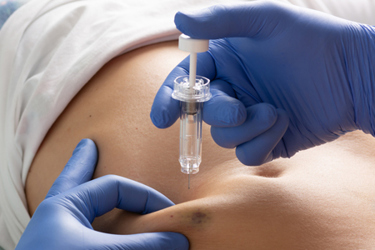
As more cancer therapies become available in subcutaneous formulations, the conversation is shifting from whether these products can match intravenous (IV) administration to how they fit into everyday oncology practice. Shorter administration times may reduce the burden on patients while helping cancer centers manage chair capacity, staffing demands, and growing treatment volumes.
Life Science Connect’s Michelle Raley caught up with Highlands Oncology’s J. Thaddeus Beck, MD, FACP, to discuss how subcutaneous administration is affecting treatment delivery, what developers should understand about the realities of community oncology, and why novel formulations should remain the foundation for the next generation of subcutaneous therapies.
How are oncologists evaluating subcutaneous administration within current treatment plans and sequencing decisions?
I view the subcutaneous route as an alternative option rather than a change in treatment plan. Sequencing decisions are driven by disease, biomarkers, and prior therapies, while subcutaneous delivery offers a more convenient way to deliver the same therapies. For many patients, particularly those receiving long-term immunotherapy or those who prefer shorter clinic visits, subcutaneous administration can reduce treatment burden without altering efficacy.
After more than three decades of caring for patients with cancer, I have learned that the best treatment is one that fits the life a patient wants to keep living. Patients are not only asking how to treat their cancer; they are asking whether they can still go to work, care for their families, and continue to do the hobbies that give their days meaning. When we offer options that give patients more flexibility in how, when, and where they receive care, we help them stay connected to the things that matter most to them. Living with cancer should not mean setting life aside, and our goal is to deliver effective treatment that supports patients in continuing to do the things they enjoy.
In practice, we are seeing both new starts and conversions from traditional IV to subcutaneous administration as we seek to improve the patient experience and infusion center efficiency while maintaining the same treatment goals.
Where may subcutaneous administration have the greatest practical impact, and where do questions remain?
It is particularly valuable in busy community oncology practices, where shorter administration times can increase capacity and expand access to care. Where IV infusions are typically given in a room full of chairs, a subcutaneous injection requires a more private area, though for a much shorter time. That shift required us as a clinic to reinvent how and where we deliver care, so we can offer innovative options such as subcutaneous administration while keeping the patient’s experience at the center. We have plans to build new facilities with adjusted infusion space to allow for even more injection chairs with privacy curtains for patients receiving these treatments, reflecting how care delivery models may evolve with more subcutaneous therapies.
There are still factors under discussion for long-term adoption, new approvals, and reimbursement considerations. The remaining challenge is often not the administration itself, but how quickly patients can gain access to the therapy. Waiting for J-codes, payer coverage decisions, insurance approval, and individual prior authorizations can create delays, particularly when a therapy is newly approved. Our early adoption has gone well so far.

When new delivery technologies are developed, they're often evaluated under highly controlled conditions. What realities of day-to-day oncology practice do you believe drug developers should better understand when designing future delivery systems and administration protocols?
In community oncology practice, delivery systems must be designed for busy clinics managing high patient volumes, limited chair capacity, and diverse patient needs. Consider the importance of minimizing administration time, reducing staff burden, and avoiding anything that adds complexity. Simple, straightforward administration helps our teams stay efficient and helps us focus on supporting the patient in front of us. For example, KEYTRUDA QLEX can be administered as a subcutaneous injection in about 1 to 2 minutes, compared with an approximately 30-minute IV infusion. That difference can meaningfully affect clinic capacity and the amount of time patients spend receiving treatment.
Equally important is flexibility, as community practices serve patients who may face transportation, work, or caregiving challenges. For a patient who is balancing work, family, or a long drive to the clinic, even a small amount of time saved can make treatment easier to fit into life. At the end of the day, a technology's true value isn't measured in controlled conditions but in how well it serves the patient it was designed for.
Several high-profile biologics have successfully launched subcutaneous (SC) versions after establishing an IV market presence. From your perspective, what have those launches taught the industry about physician behavior and patient preferences that wasn't fully appreciated beforehand?
The transition from IV to subcutaneous has reinforced that both physicians and patients place value on convenience when efficacy and safety are comparable. Physicians are often willing to adopt new delivery methods when they can reduce treatment time and improve clinic efficiency. Efficiency is invisible to a patient until it's missing. When a clinic runs well, cancer treatment becomes a part of their day, not their entire day, and the rest of it still belongs to them. Patients appreciate spending less time in the clinic and having treatment fit more easily into their daily lives.
When you think about the next generation of SC therapies, where do you see the greatest opportunities for advancement: novel formulations, delivery devices, digital integration, or some combination of these? How should companies prioritize investment across those areas?
I believe the greatest opportunity is in novel formulations. Advances that enable faster administration, less frequent dosing, improved tolerability, and greater flexibility in care settings can have the most meaningful impact. In a community setting especially, these innovations can improve access and reduce time spent receiving treatment, benefiting both the patient and the provider. Once a strong formulation is established, devices and digital tools can build on that foundation. The greatest impact begins with the formulation, and the rest follows suit. A delivery device or digital platform without the right formulation is like a cart without its horse. For that reason, I would encourage companies to invest in formulation first, so that every advance that follows serves the patient and the clinic delivering their care. When you start with novel formulations, the rest of the innovation has something meaningful to build on.
What emerging trends or technologies in SC delivery would you encourage drug developers to pay close attention to over the next decade?
Ultimately, the greatest value will come from innovations that make treatment easier, faster, and more accessible while maintaining the same efficacy that providers expect. I would encourage drug developers to focus on less frequent dosing and broader use across indications. These advances can provide meaningful impact to patient convenience and expand treatment capacity in busy practices.
About The Expert:
 J. Thaddeus Beck, MD, FACP, earned his medical degree and completed a residency in Internal Medicine at the University of Arkansas for Medical Sciences, then a fellowship in Hematology and Oncology at Duke. Board certified in Internal Medicine, Medical Oncology, and Hematology, he became a Fellow of the American College of Physicians in 2002. In 1996, Dr. Beck co-founded Highlands Oncology, helping it become a leading community-based oncology program, with 140+ trials and Arkansas’ only community-based Phase I center. He is Interim CEO and Medical Director of Highlands Oncology and Vice President of its Foundation, active in-patient care and research.