
INFUSION DRUG DELIVERY ARTICLES
 Qualification And Validation Of Depyrogenation Tunnels And Autoclaves
Systemic vulnerabilities exist in thermal uniformity assurance, steam penetration verification, regulatory fragmentation, and tech harmonization.


INFUSION DRUG DELIVERY VIDEOS
In this segment of the Drug Delivery Leader Live online event, Injected, Infused, or Implanted: A Penetrating Look At Patient Centricity, Chief Editor Tom von Gunden asks panelist Fran DeGrazio to explain how dosing influences delivery device or platform selection. She illustrates key considerations with examples including prefilled syringes and autoinjectors.
In this segment of the Drug Delivery Leader Live online event, Innovations In Drug Delivery: Opportunities For Enhancing Familiar, Mature Approaches, panelists Carolyn Dorgan and Courtney Evans from delivery device consultancy Suttons Creek talk with host Fran DeGrazio about factors creating challenges and opportunities in moving patients to on-body injectors (OBIs) and other wearable drug delivery systems.
In this segment of the Drug Delivery Leader Live online event, Next-Gen Drug Delivery: Rethinking Routes For New Therapies, Carolyn Dorgan, director of technical services at device design consultancy Suttons Creek, outlines key management considerations for biopharma companies developing combination therapies. These include suppliers, partnerships, quality, container closure, and regulatory.
In this segment of the Drug Delivery Leader Live online event, Eying The Drug Delivery Regulatory Landscape: The 'Must See' Watch List For 2026, Chief Editor Tom von Gunden asks the panel to comment on regulatory challenges and considerations for traditional drug product pharma companies moving into combination product development. Patient centricity, device expertise, and supplier relationships are among the topics identified.
INFUSION DRUG DELIVERY RESOURCES
-

Demonstrating the compatibility of any material in contact with drug product throughout its lifecycle (manufacture, containment, and delivery) is a necessity for a regulatory submission.
-

Explore the potential of polymeric nanoparticles (PNPs) as an alternative to viral vectors. PNPs offer design flexibility, enabling larger payloads, targeted release, and minimized side effects.
-

As IV-administered drugs proliferate, sponsors must understand the associated regulatory requirements, methodologies for useful/required information, and formulations suitable for administration.
-

Autonomous IV therapy extends care beyond clinics, using imaging, precision control, and adaptive intelligence to improve vein access and enable safe treatment in more settings.
-

The increasing prevalence of chronic disorders, growing demand for self-administration, and the increasing demand for minimally invasive surgeries have fueled the growth of the LAI drug delivery market.
-

Gene therapies rely on efficient, precise methods of delivering genetic material. Examine how combining polymeric nanoparticles with CRISPR therapies is increasing the potential for improved treatment.
-

Battelle’s HIT SCAN™ platform accelerates gene therapy by rapidly designing, screening, and optimizing nanoparticle drug delivery systems using high-throughput robotics and machine learning.






INFUSION DRUG DELIVERY SOLUTIONS
-

Capabilities that improve efficiency and accelerate development.
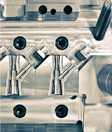
B. Braun's OEM Division offers a variety of in-house molding capabilities including injection molding, insert molding and over molding. They own a primary 400,000-square-foot U.S. plant that includes a 16,500-square-foot ISO Class 8 molding facility housing some of B. Braun’s 80 injection molding presses, which range from 55-330 tons.
-
 Using Polymeric-Nano Particles")
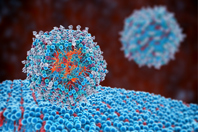
Examine a NVGD platform that tackles the primary obstacle hindering gene editing therapies: efficient delivery. Utilizing engineered nanoparticles, the platform overcomes limitations associated with payload size.
-

This comprehensive suite of services encompasses the entire spectrum of user research, starting from the conceptualization of study designs to meticulous data analysis and comprehensive reporting.
-

In recent years, hospitals, clinics, and others have experienced chronic shortages of medical solutions. The Solutions for Life initiative is a billion-dollar investment in meeting nationwide demand for these products.
-

By partnering with Battelle, your organization can reduce risks and save on investment costs, leading to more successful and sustainable outcomes.
-

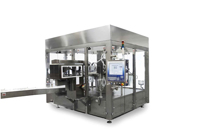
RASR filling and closing machines are designed to treat IV bags. These machines are able to fill single chamber as well as dialysis multi-chambers bags.
-

These containers can be delivered with a full line of solutions used in clinical settings, including basic saline, heparin premix, and lidocaine. The chemistry used to produce the container uses neither polyvinyl chloride (PVC) nor the plasticizer DEHP.
-

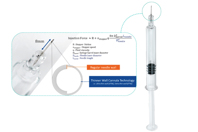
BD Neopak™ XtraFlow™ Glass Prefillable Syringe solution leverages 8 mm needle length in combination with thin wall cannula to reduce pressure drop and enhance flow.
-

Learn how our team of scientists, engineers, and human-centered designers, as well as our world-class facilities, empower us to confidently guide your product toward a successful market launch.



INFUSION DRUG DELIVERY NEWS
- Melbourne-Developed Drug Delivery Platform Delivers 'Impressive' Results In International Bowel And Ovarian Cancer Trial
- Race Executes Agreement With Ardena For GMP Manufacturing Of RC220
- Acasti Announces WuXi Clinical As CRO To Conduct STRIVE-ON Pivotal Phase 3 Safety Trial For GTX-104 In aSAH Patients
- Ascendia Pharmaceuticals Develops Novel Nanoemulsion IV Formulation For Clopidogrel That Received IND Approval
- Viridian Therapeutics Announces Partnership With Drug Delivery Innovator Enable Injections
- Scaling Up Capacity, Eitan Medical Opens New Manufacturing Facility Bolstered by Semi-Automated Production Lines