
Delivery Device Functional Scrutiny: Can You Pass (Without) The Test?

By Tom von Gunden, Chief Editor, Drug Delivery Leader
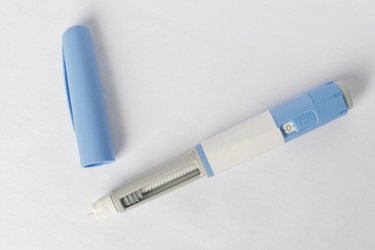
Since FDA’s release of its draft guidance on Essential Drug Delivery Outputs (EDDOs) in June 2024, questions and curiosity remain about approaches to identifying and testing device features deemed essential during product design and development. Here at Drug Delivery Leader, we have been monitoring biopharma industry interest in when and how to best to address EDDOs, including those most critical to device functional stability, in the context of regulatory submissions.
In fact, in the few months immediately following the release of the draft EDDO guidance, we saw significant attendance and activity in a series of Live online panel discussions we produced on the subject: “The FDA Guidance on EDDO: What to Know, What to Do” in late 2024 and, in early 2025, “EDDOs Revisited: Putting Essential Drug Delivery Outputs Into Practice.”
Do Platform Technologies Reduce Testing Demands?
Over the subsequent months, I have also watched the related and growing industry interest in the promise (and potential pitfalls) of leveraging delivery device platform technologies. Among those “promises” is the hope that, because of their intended repeatability, platforms can reduce the regulatory burden for new products. A common example would be an autoinjector-based delivery system first used for one approved, commercialized product and then reapplied, in whole or in part, as the delivery device for subsequent drug product assets in development.
Among the aspects of regulatory burden that, theoretically, could be reduced in subsequent product development cycles across a widening portfolio of assets would be device design testing, including, perhaps most notably and critically, functional stability.
So, thinking about EDDOs, platform technologies, regulatory scrutiny, and other device design considerations, I caught up, once again, for a video interview with combination products regulatory consultant Doug Mead. On Drug Delivery Leader, we had recently published another bylined article from Doug, “Stability And Release Testing For Delivery Devices: Waived Or Wanted?” in our Regulatory Reconnaissance series of takes. (My article here is one of those.)
As he has been doing, Doug reported on results of conducting GenAI-facilitated queries on FDA precedents. This time he looked for examples of regulatory waivers requested and/or granted for functional stability and release testing.
In our convo about his deep dive into agency databases, I asked Doug about EDDOs, platforms, and their relationship to testing of device functionality.
Conversation Transcript: Stability And Release Testing Precedents With Doug Mead
Tom von Gunden, Chief Editor, Drug Delivery Leader:
Hello folks, Tom von Gunden, chief editor at Drug Delivery Leader here. Again, I'm joined by author of one of our guest columns, Doug Mead, in a series that we've been calling “Regulatory Reconnaissance,” where we report on the results of queries that Doug has conducted to determine precedents around certain regulatory issues.
Doug's most recent article takes a look at precedents around waivers, or attempts at waivers, or granting of waivers around stability and release testing. So, that's what we're going to talk about today: Doug's article on that subject, which we certainly encourage you folks to read if you haven't already.
So, welcome, Doug.
Doug Mead, President and Principal Consultant, CP Pathways LLC:
Thanks a lot, Tom. Happy to chat with you.
Well, good. It's always a pleasure to have you here, and so I'm glad you're back. And thanks again for the article that you penned for Drug Delivery Leader. So, I’m going to ask you about several areas that I found particularly interesting about the article.
For a little bit of background or context, a lot of our readers have been interested in the [FDA] EDDO guidance on Essential Drug Delivery Outputs that follow on from the Essential Performance Requirements, or EPR concept, that they were used to ahead of that. In fact, we did a Live online panel discussion [“EDDOs Revisited: Putting Essential Drug Delivery Outputs Into Practice”] on Drug Delivery Leader a while back on the topic.
So, you mentioned that (EDDO guidance], a little bit of the context for the discussion of waivers around stability and release testing. So, can you tell us a little bit more about the relationship between the EDDO and EPR concepts and testing?
Sure, Tom. I think one of the things that is in the EDDO guidance that not many people talk about is the potential for a waiver of EPRs and functional stability testing. And FDA comes out and says if they [EPRs] are not “stability-indicating,” you may request a waiver. And I mean waiver very broadly.
The second thing is for release testing of a combination product — the drug delivery side of it — for commercial release. FDA also says you may be able to justify, with upstream controls and your overall control strategy, not performing release testing of certain EDDOs. So, these are great opportunities to try to get some flexibility with FDA.
And so, that prompted my research to see, given the precedents, what has FDA really been saying in reviews of combination products lately.
Okay, yes. And there's a quick reference or so in the article to some of your clients in the consulting work that you do. And you mentioned, I can just paraphrase here, that sometimes they seem to struggle around decisions, strategy decisions, really, about how to approach the regulatory components of stability and release testing, and the question of whether or not to seek a waiver.
So, I was interested in that reference to see if perhaps you could provide additional flavor around the kinds of situations [in which] you hear those concerns and questions emerge in your conversations with them [biopharma clients].
Yes, it comes up all the time, really. And if you're looking at a prefilled syringe / needle safety device that a company has developed with other drugs, or are developing for the first time, and then an autoinjector that comes from a commercial supplier of components that's a platform technology that they are adapting: The question comes as a repairing of their design inputs, outputs, a design verification traceability matrix where they have to list which EPRs are being tested in stability and which are tested on release.
These questions come up early. The companies really know these devices and their technologies very well, So, they'll sit back and say, well, you know, I can see how we want to confirm dose volume accuracy or injection time, because they can vary.
But something like activation force of an autoinjector, or the needle extension of an autoinjector. They're so fixed that, number one, if you've done design verification testing and process validation testing, you pretty much know that they're fixed.
So, those are the ways the drug development scientists think about these things and say, what's the scientific rationale for testing it or not testing it? So, these dilemmas come up early in development, and they progress as the company is developing, going through the design control process.
Yeah, and I'm guessing that part of that inflection point, I guess you could call it, for those folks thinking about how to proceed, and especially if it's a question around whether to pursue a waiver or not, are there any particular risk-based considerations or business-based decisions on the other end that might prompt a company to move in one direction versus the other?
 Sure, that's a great question.
So, the dilemma in a company Is, do we try to get a waiver of stability or release testing of any EPR, or do we just test them all? And what they're trying to do is minimize regulatory risk or have any part of their application be controversial.
So, generally, what they want to do, or should do, is go to FDA in a Type B or C or D meeting, and say, “This is our development plan. This is how we intend to address stability. This is how we intend to address release of EPRs. This is our scientific justification. Do you agree?”
And I think, as we move forward after the EDDO guidance, we might see more flexibility. So, later on, I'll contrast what's actually in the record. But I think it's a valid question to ask now.
And, in terms of regulatory risk, it's a decision that the company makes about whether they want to achieve flexibility, or they just want to bite the bullet — do what they've done for their other products and minimize that risk.
Sure, sure.
And by the way, since we are talking about combination products, I'm curious about whether there are distinctions or different considerations that people should have in mind when it comes to the device component versus, say, the drug component, to make blunt distinction there, when it comes to these decisions around testing.
Yes, we can talk a little bit about release testing because that's where it gets interesting.
So, for a drug product, they have, obviously, drug quality parameters that they test [for] instability. It's very much established in terms of a CDER expectation.
And what a company can do is, with 30 or 40 drug samples for release, they can know that the entire batch of several thousand doses are consistent, because they're all mixed together. And then there's a fill process. So, more or less you've tested 30 samples; it characterizes the entire batch.
Not so much with drug delivery devices. [That] is statistical testing, destructive testing. So, for release, you're testing maybe 50 samples and a batch of 3,000 to 5,000 units. So that tells you a lot about those 50 samples. But there could be one-off failures or component defects that are never going to be detected.
So, if you look at release testing, you're doing design verification, you're doing stability testing, you're doing process validation. You have an upstream control strategy of the supplier, the components.
And when it comes down to it, after you've done all those things, and after all the devices have passed those tests, what is the point of doing release testing? So, that's the logical question.
And I think it really comes down to comfort level with FDA. They just think a product released for the commercial market should be tested for release. So, that's kind of the dilemma.
Yeah, gotcha. Thanks for that explanation.
This is going to probably be a little bit of a spoiler alert for readers of your article if they haven't read it already, but I don't think I'm going to be giving a whole lot away here to say that — and please correct me if I'm mischaracterizing the conclusions we should draw, Doug — but, from my perspective, the article essentially shows that, at least based on the amount of results you could get back and the searches that you did at this point in time, it seems as though, generally speaking, few companies are pursuing waivers at this point, and FDA is rarely granting them.
Is that accurate, and can you speculate a little bit on why?
Yeah, I'm not sure I know all the reasons why. It's a very tough GenAI search strategy. I asked the question in multiple ways, with multiple search tools. And I did find examples. You can find examples where FDA had relieved the company from testing one EPR parameter.
I also looked at the overall picture and found seven, eight, or nine autoinjectors, for example, where the company had tested all the EPRs and additional functional performance tests for both stability and release.
So, the nuances really come out. If a company did not do that, those kinds of tests, the FDA will request that they do it. And the company can do a back and forth and say, well, we don't think it's stability-indicating, or we think our upstream controls are adequate.
And then it becomes a judgment call between FDA and the company. By and large, FDA does request this testing right now.
So, what I'm looking for is, given EDDO guidance and the proposed flexibility, whether or not more companies are going to try to justify these waivers. And I have seen that in my client base. But they have not played out in terms of definitive positions from FDA at this point.
Yeah, gotcha. You mentioned and touched upon platform technologies a little bit earlier. And from my seat as a chief editor at an industry-covering publication, I certainly hear people's hopes, dreams, anticipation that leveraging platform technologies for delivery systems might in some way, down the road, as
additional products are developed to ride, so to speak, on the same platforms, that some of the regulatory requirements and expectations can be reduced for subsequent products, perhaps even including the testing component.
So, should people have hopes and dreams around the use of platform technologies as a way to reduce their regulatory burden and regulatory risk?
That's a great question, and I think we started to see some leveraging of prior data across drugs within one company. Whether or not that can be expanded for other companies who are aware of that history or just working with their supplier, like a needle safety device [that] has been evaluated 25 times by FDA. So, FDA knows the data. The world knows the data. And it's a question of, do you have to test the trigger force of a needle safety device with a drug product when it's so well characterized with water, with air, by the supplier, and leverage the supplier data?
So, I asked that question, and I did find one case where the company did not do the official testing of the assembled product but did rely on the supplier data. And FDA did accept it.
So, there is precedent both ways. They want robust testing of the actual commercial product, and in certain cases, they will allow the leveraging of supplier data or prior data.
So, the expectations are evolving, and it's good to have the dialogue.
Well, I like to give you the opportunity at the close of these conversations to see if you have additional words to the wise, or tips and tricks, or recommendations for folks in the audience. And those could be around the use of the search tools themselves, which we've been promoting through your article series, or on this particular kind of query around testing.
So, on either or both, do you have anything else you want to offer to say, okay, as you move forward, here's my recommendation or next step tip?
Yes, my motivation in this whole series is to encourage regulatory and drug delivery device folks to get very familiar with doing these searches. As you develop search strategies and learn the right language and the kinds of approaches you can take, you can glean a lot of information from FDA review memos that can help you understand not only the regulatory risks, but what prior justifications have been successful with FDA, and which have fallen flat.
So again, the motivation is to use these GenAI search tools to look at precedents, review the guidance very carefully, and then use those inputs in the development and regulatory plan.
Yes, so as we close today, I want to encourage our readers to take a look at not only the article that we are discussing today around stability and release testing ["Stability And Release Testing For Delivery Devices: Waived Or Wanted?”], but also some of Doug's other work. One of [those articles] is about actually using precedent research and AI tools to do that. He’s also done one on Human Factors, a query there, so please check those out as well