
Designing Nanoparticles: Why Size Comes First
By Faisal Mohammad Shamim Khan
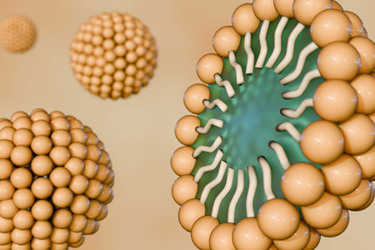
Nanoparticle scientists often focus on composition, ligand chemistry, and payload strategy, leaving particle size as a characteristic to tighten up later in the development process. This sequence has proven itself to be backwards. Size is a design variable that changes particle circulation, uptake, trafficking, tissue penetration, release behavior, and even the safety profile of the material system. In simpler terms, size determines what the body sees, where the particle goes, and how long it persists.1,2
The size of a particle optimizes delivery, but size alone cannot solve nanoparticle delivery challenges. A particle designed for fast cellular uptake may clear too quickly in vivo. A particle sized for long circulation may struggle to cross a mucus layer or dense tumor matrix. And a formulation that looks monodisperse may behave very differently once serum proteins adsorb to its surface and redefine its biological identity. Size should be chosen against the dominant barrier, not inherited from the manufacturing method.1,3,4,5
The Importance Of Size
Size changes nanoparticle behavior at the most basic physical level. As diameter decreases, surface area increases relative to mass, which increases interfacial free energy and amplifies the influence of surface-bound ligands, surfactants, and adsorbed biomolecules. Small shifts in mean diameter can alter packing, aggregation tendency, dissolution or release behavior, and the effective presentation of targeting chemistry. Size also shapes how a particle diffuses, collides, and interacts with membranes, reiterating why it should be considered a mechanism-setting parameter rather than a passive attribute.1, 8
Once nanoparticles enter biological fluid, size will also determine the protein corona that forms around them. Cedervall and colleagues showed that protein binding to nanoparticles is dynamic rather than static,4 while Lundqvist and colleagues showed that changing nanoparticle size changes corona composition even when the base material remains the same. These studies indicate that size influences immune recognition and downstream cell interactions both directly and indirectly.5 As a formulator, you may think you are developing a 60 nm targeted particle, but the body is often responding to a larger protein-decorated construct whose biological behavior is now size-mediated.
Physical Effects
The physical effects of size show up early, often before the particle reaches any biological barrier. Colloidal stability, aggregation tendency, and apparent shelf behavior are all size dependent. Very small particles carry high surface energy and can be thermodynamically driven to agglomerate without a robust stabilization strategy. Broad size distributions can worsen these effects by introducing multiple collision and packing behaviors in a single batch. From a development standpoint, this affects not only storage stability but also filtration losses, sterilization feasibility, and the reproducibility of the product being administered to the patient.6,7
Size also governs diffusion, sedimentation, suspension behavior, and release kinetics. Smaller particles generally diffuse faster and sediment slower, improving suspension uniformity, especially in low-viscosity systems. The increase in surface area that helps dispersion can also accelerate burst release, resulting in faster dissolution or faster degradation of labile surface coatings. For nanocrystals, reducing size is often a powerful way to increase apparent solubility and bioavailability, but it can also make the formulation more vulnerable to aggregation, Ostwald ripening, or amorphous instability if the system is not well protected.6,7
Chemical Consequences
Size alters chemistry at the interface. Smaller nanoparticles expose a larger fraction of atoms or functional groups at the surface, which can increase surface reactivity and alter susceptibility to oxidation, hydrolysis, and catalytic side reactions. This geometric shift can also change ligand density and presentation due to the highly curved surface. The spatial organization of PEG chains, targeting ligands, or adsorbed proteins is not the same as it is on a larger particle with lower curvature. For drug delivery, this affects more than design. It changes coating efficiency, steric protection, ligand accessibility, and the stability of the adsorbed layer that ultimately controls how the particle behaves in biologic media.1,8
Average size is never enough for efficiency. Two formulations with the same nominal chemistry but different size distributions may show different drug leakage, coating robustness, and biological performance because of how the different surfaces are being chemically presented. In practice, this means size control must be linked with surface characterization rather than treated as a separate entity after formulation.1,6,8
Biological Consequences
Biologically, size influences almost every step between dose and efficacy. It affects which proteins bind first, how strongly the mononuclear phagocyte system recognizes the particle, and how efficiently cells internalize the material. The classic uptake studies by Chithrani and Rejman helped establish an important point: uptake is not linearly improved by shrinking particles. Instead, there are established size windows that favor particle endocytosis and trafficking. A formulation tuned only to minimize size may miss the size range that best supports the intended intracellular route.2,3
Size also influences circulation, endothelial interaction, extravasation, tissue penetration, and clearance. After entering the bloodstream, very small particles may clear rapidly through the kidneys, while larger systems may circulate longer but face greater capture by the liver and spleen. In tumors and inflamed tissues, particles that are too large may struggle to move beyond perivascular space, while particles that are too small may not be retained long enough to be useful.9,10,15
Toxicity can also change depending on particle size. Smaller particles can reach compartments unavailable to larger ones, which may be useful for delivery but can also increase unintended interaction with sensitive tissues and subcellular structures. This doesn’t mean small nanoparticles are inherently unsafe; it means their safety cannot be inferred from composition alone. The relevant risk question is whether the chosen size changes biodistribution, cellular access, inflammatory signaling, or persistence in a way the program has not modeled.1, 8, 10

Modifying Size By Route Of Administration
The “right” particle size changes again when determining the best route of administration for the therapy. For intravenous delivery, the central trade-off is usually between clearance and access. Choi and colleagues showed that sufficiently small nanoparticles can cross the renal filtration barrier, while larger particles are more likely to remain in circulation and accumulate in the liver and spleen. This makes intravenous design a balancing act: too small gains systemic exposure but may disappear into clearance; too large, and the formulation may never reach the target tissue enough to produce a therapeutic effect.9,10
For oral delivery, particle size can affect mucus transport, residence time, epithelial uptake, and access to Peyer’s patches. Jani and colleagues demonstrated that gastrointestinal uptake of nanoparticles is size dependent, and Florence emphasized that oral nanoparticle performance cannot be reduced to a simple “small particles cross better” rule because mucus, enzymatic exposure, and local anatomy all shape the outcome. In practice, oral size selection should be tied to the intended uptake mechanism and to how long the formulation must remain intact in the gut lumen to work.11,12
For pulmonary, topical, and local injectable systems, the same principle holds true, but with a change in barrier. In the lungs, ultrafine particles can reach deep regions and cross cellular membranes by nonphagocytic mechanisms, which can be advantageous for delivery but also raises exposure and safety questions. In topical and transdermal systems, nanoparticle size strongly influences whether particles remain near the surface, localize in follicles, or interact more deeply with compromised skin. For depot systems, formulators may intentionally choose larger nanoscale assemblies or broader distributions if the goal is retention and controlled release rather than fast systemic transport. All of these examples showcase that size should be considered as an important factor when determining route of administration.13,14,15
Future Direction: From Descriptive Characterization To Size-Driven Design
Regulators increasingly expect developers of nanomaterial-containing drug products to justify why the measured size attributes matter and how they are controlled. The FDA’s guidance on drug products that contain nanomaterials states that expectation explicitly: formulators need fit-for-purpose characterization, attention to distribution rather than average diameter, and a clearer link between material attributes and product performance. These stipulations create a healthier standard than reporting a single mean size and leaving the rest to be noted as a manufacturing detail.16
Part of the success of future nanoparticle design will be making size predictions earlier in development. Model-informed development, data-driven screening, and emerging AI-guided optimization tools are being explored to reduce the usual trial-and-error cycle in nanoparticle formulation. The promise is real, but the current evidence base is still thinner than the hype. What industry needs most is not another heat map of particle sizes but better structure-property models that connect size distribution to uptake, clearance, and release under biorelevant conditions and that remain valid when the process is scaled. Until then, the most robust programs will be the ones that treat size as a critical quality attribute tied to mechanism.16,17
Conclusion
Nanoparticle size is not a secondary detail; it changes physical stability, surface chemistry, immune recognition, cell entry, route-dependent transport, and the eventual balance between efficacy and safety. The most successful nanoparticle programs will be the ones that choose size intentionally, based on the barrier they need to cross and the exposure profile they need to achieve. The process can then be built around the efficiency that size can produce, rather than hoping biology will accommodate an irrelevant choice.1, 15, 16
References
- Albanese A, Tang PS, Chan WCW. The effect of nanoparticle size, shape, and surface chemistry on biological systems. Annual Review of Biomedical Engineering. 2012;14:1-16.
- Chithrani BD, Ghazani AA, Chan WCW. Determining the size and shape dependence of gold nanoparticle uptake into mammalian cells. Nano Letters. 2006;6(4):662-668.
- Rejman J, Oberle V, Zuhorn IS, Hoekstra D. Size-dependent internalization of particles via the pathways of clathrin- and caveolae-mediated endocytosis. Biochemical Journal. 2004;377(Pt 1):159-169.
- Cedervall T, Lynch I, Lindman S, Berggård T, Thulin E, Nilsson H, Dawson KA, Linse S. Understanding the nanoparticle-protein corona using methods to quantify exchange rates and affinities of proteins for nanoparticles. Proceedings of the National Academy of Sciences of the United States of America. 2007;104(7):2050-2055.
- Lundqvist M, Stigler J, Elia G, Lynch I, Cedervall T, Dawson KA. Nanoparticle size and surface properties determine the protein corona with possible implications for biological impacts. Proceedings of the National Academy of Sciences of the United States of America. 2008;105(38):14265-14270.
- Bhattacharjee S. DLS and zeta potential - What they are and what they are not? Journal of Controlled Release. 2016;235:337-351.
- Gigliobianco MR, Casadidio C, Censi R, Di Martino P. Nanocrystals of poorly soluble drugs: drug bioavailability and physicochemical stability. Pharmaceutics. 2018;10(3):134.
- Nel AE, Mädler L, Velegol D, Xia T, Hoek EMV, Somasundaran P, Klaessig F, Castranova V, Thompson M. Understanding biophysicochemical interactions at the nano-bio interface. Nature Materials. 2009;8(7):543-557.
- Decuzzi P, Godin B, Tanaka T, Lee SY, Chiappini C, Liu X, Ferrari M. Size and shape effects in the biodistribution of intravascularly injected particles. Journal of Controlled Release. 2010;141(3):320-327.
- Choi HS, Liu W, Misra P, Tanaka E, Zimmer JP, Ipe BI, Bawendi MG, Frangioni JV. Renal clearance of quantum dots. Nature Biotechnology. 2007;25(10):1165-1170.
- Jani P, Halbert GW, Langridge J, Florence AT. Nanoparticle uptake by the rat gastrointestinal mucosa: quantitation and particle size dependency. Journal of Pharmacy and Pharmacology. 1990;42(12):821-826.
- Florence AT. Issues in oral nanoparticle drug carrier uptake and targeting. Journal of Drug Targeting. 2004;12(2):65-70.
- Geiser M, Rothen-Rutishauser B, Kapp N, Schürch S, Kreyling W, Schulz H, Semmler M, Hof VI, Heyder J, Gehr P. Ultrafine particles cross cellular membranes by nonphagocytic mechanisms in lungs and in cultured cells. Environmental Health Perspectives. 2005;113(11):1555-1560.
- Alvarez-Román R, Naik A, Kalia YN, Guy RH, Fessi H. Skin penetration and distribution of polymeric nanoparticles. Journal of Controlled Release. 2004;99(1):53-62.
- Blanco E, Shen H, Ferrari M. Principles of nanoparticle design for overcoming biological barriers to drug delivery. Nature Biotechnology. 2015;33(9):941-951.
- U.S. Food and Drug Administration. Drug Products, Including Biological Products, that Contain Nanomaterials: Guidance for Industry. Silver Spring, MD: FDA; 2022.
- Villaseñor-Cavazos FJ, Torres-Valladares D, Lozano O. Modelling and optimization of nanovector synthesis for applications in drug delivery systems. arXiv preprint. 2021; arXiv:2112.02002.
About The Author
 Faisal Mohammad Shamim Khan is a pharmaceutical scientist and pharmacovigilance specialist whose work spans drug safety, nanoformulation, and translational research. He brings over seven years of global pharmacovigilance experience, alongside hands-on expertise in lipid nanoparticles, albumin-based systems, and polymeric nanocarriers. His background integrates regulatory precision with formulation science and cell-based research. His work emphasizes generating reliable, decision-ready data that advances robust, safe, and effective pharmaceutical products from development toward clinical and commercial application.