
Device Design To Address Usability And Mitigate Use-Related Risks – A Medical Affairs And Human Factors Perspective
Dr. Sylvine Raverdy-Wilson
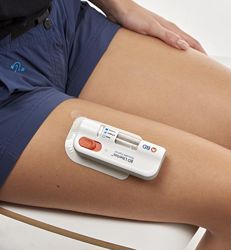
Increasing prevalence of chronic disease and a shift toward patient‑centric care are accelerating the move from clinic‑based intravenous delivery to large‑volume subcutaneous administration. This transition has prompted the development of wearable injectors that can deliver higher‑volume biologics over extended durations while minimizing complexity for patients and caregivers. These systems must balance formulation needs, user capabilities, and environmental factors, making risk‑management and human‑factors methodologies essential throughout development.
Use‑related risk analysis plays a central role in identifying potential user errors, linking them to clinical risks, and guiding design decisions that reduce dependence on patient technique. Prefilled and pre‑assembled devices can meaningfully reduce contamination risk, dosing inaccuracies, and preparation errors by eliminating multi‑step tasks such as transferring the drug from vials or assembling cartridges. For immunocompromised and general patients alike, fewer handling steps and built‑in protections lead to safer, more consistent treatment experiences. This approach aligns with regulatory expectations that prioritize design‑based risk mitigation over reliance on labeling or user training.
Get unlimited access to:




Enter your credentials below to log in. Not yet a member of Drug Delivery Leader? Subscribe today.