
From Exosomes To Nanodrugs: Advancing Therapeutic Delivery For CNS Repair
A conversation with Lior Shaltiel, Ph.D., CEO and director, NurExone Biologic
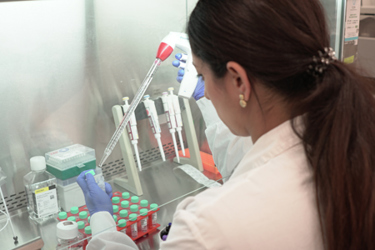
The broader field increasingly recognizes exosomes as regenerative biological particles. NurExone Biologic builds on this foundation in two ways. First, it develops and manufactures naïve exosomes for their intrinsic biological and regenerative properties. Second, it uses proprietary loading technology to add defined therapeutic cargo, converting naïve exosomes into targeted delivery systems without genetically engineering them. For its lead candidate, this means combining the natural cellular-level interactions of exosomes with targeted cargo designed to support neuronal repair. Looking ahead, the company believes the same platform may support the loading of other molecular cargos, expanding the potential of exosomes as natural drug delivery vehicles across multiple indications.
In this Q&A, Life Science Connect’s Izzy Dininny caught up with Lior Shaltiel at NurExone Biologic to discuss the challenges associated with developing exosome-based therapeutics. Here, he provides intel on drug delivery, navigation of the regulatory space, and manufacturing at scale.
Your work highlights exosomes as a promising platform for RNA delivery to the CNS. What makes exosomes particularly suited for overcoming traditional delivery barriers like the blood–brain barrier?
Exosomes offer a different starting point because they are biological nanoparticles used by cells for communication. They are increasingly being recognized not only as carriers but also as regenerative particles with potential roles in inflammation modulation, tissue repair, and intercellular signaling. This is important because particle size is not the only consideration for delivery to the CNS. Exosomes also carry membrane lipids and surface proteins that may influence cellular uptake and interaction with damaged neural tissue.
In NurExone’s preclinical spinal cord injury work, brief intranasal administration of exosomes loaded with a proprietary siRNA sequence designed to inhibit the PTEN protein was associated with recovery of motor function, sensation, and bladder control in 75% of animals after a brief treatment cycle. For CNS drug delivery, this is an important proof of concept: despite the blood-brain and blood-spinal cord barriers, a minimally invasive intranasal route produced functional effects in a full-transection CNS model.
These results are not explained by the tiny size of the particles alone. They support the broader concept that exosomes may be useful for CNS delivery because they combine nanoscale dimensions with biological membrane features that can influence cellular uptake and interaction with damaged neural tissue.
RNA delivery is becoming increasingly competitive, with lipid nanoparticles and viral vectors continuing to evolve. Where do you see exosomes clearly outperforming these approaches and where do they still fall short?
My professional experience is in membrane technology and lipid-based drug delivery, and I have great respect for what lipid nanoparticles have achieved. LNPs and viral vectors have both changed the field. But I am convinced that nature has already built one of the most sophisticated delivery systems: the exosome.
Each platform has strengths, but exosomes offer a fundamentally different starting point. Viral vectors are highly efficient when the goal is durable gene expression. They can be powerful in some genetic diseases but can also be a limitation when the desired biological effect should be temporary. In acute nervous system injury, our goal is not to permanently alter the neuron. In our work, the objective is to transiently downregulate PTEN using siRNA during a critical repair window after a traumatic injury. In that context, I believe an exosome-based RNA delivery system is especially well aligned with the biology.
Lipid nanoparticles have demonstrated manufacturability, scalability, and important clinical precedent. They are strong when systemic delivery is acceptable and when the main task is to encapsulate and protect RNA long enough to reach the target cell. But many LNPs still face challenges around biodistribution, inflammatory response, repeat dosing, and delivery to protected tissues such as the CNS. Their surface can be optimized, but they remain synthetic particles.
That is where I see the real advantage of exosomes. They are not simply containers for RNA. They are biological vesicles used by cells for communication, with natural surface signals and intrinsic biological activity. In regenerative medicine, that matters tremendously. Naïve exosomes may contribute anti-inflammatory, regenerative, and tissue-modulating activity of their own. Loaded exosomes build on that foundation by adding a defined therapeutic cargo. For me, that combination makes exosomes a compelling platform for RNA delivery, especially where the therapeutic goal is not only to reach a tissue but to interact with it biologically.
In your preclinical research, you worked with intranasal administration. In clinical trials of your first exosome-based therapy for acute CNS injuries, what route of administration will be used and why?
In our earliest preclinical traumatic spinal cord injury studies, intranasal administration demonstrated functional recovery after a brief noninvasive treatment cycle. Given the limited treatment options for acute traumatic spinal cord injury, we feel a real urgency to advance toward clinical testing. Intrathecal administration supports that goal by providing a clinically established minimally invasive route. This change was a development decision intended to accelerate translation. In later dose-ranging studies, intrathecal administration showed dose-dependent gait recovery, with animals in the high-dose group regaining walking ability in both hind limbs.
For optic nerve injury, a second indication that has shown preclinical promise, the route is different because the anatomy is different. In our preclinical optic nerve work with the Goldschleger Eye Institute at Sheba Medical Center, ExoPTEN was delivered locally to the eye. Professor Ygal Rotenstreich used a unique delivery approach designed to bring the therapy close to the injured optic nerve region while avoiding invasive surgical approaches. In that model, treatment was associated with recovery of retinal signal transmission and improved survival of retinal ganglion cells.

Exosome-based therapies sit in a somewhat ambiguous regulatory space. What regulatory hurdles has NurExone faced? What have you learned that could help others navigate these challenges?
Exosome therapeutics are still an emerging modality, so one of the main challenges is helping regulators clearly understand what the product is and how it is controlled. With ExoPTEN, we are developing a defined exosome-based nanodrug: naïve exosomes loaded with PTEN siRNA using proprietary loading technology.
That means the regulatory package needs to address both sides of the product: the exosome and the therapeutic cargo. Key questions include the source of the exosomes, how they are produced, how they are loaded, what defines identity and purity, how potency is measured, and how batch-to-batch consistency is demonstrated.
The main lesson we have learned is that CMC must be built early. For exosome products, manufacturing, characterization, potency, and release testing are central to the regulatory story. Showing that you can produce a consistent biological nanoparticle product and connect your analytical data to the intended mechanism of action is essential.
Receiving Orphan Drug designation from both the FDA and EMA for acute spinal cord injury represents an important milestone, validating both the program and the significant unmet need it addresses. At the same time, meaningful regulatory progress depends on the disciplined IND-enabling work behind the designation: safety, biodistribution, toxicology, dose rationale, manufacturing controls, and clinically relevant functional endpoints.
The advice I would give other developers is to engage regulators early and define the product early. NurExone held meetings with the FDA early in the development cycle, which helped clarify expectations and inform the design of our IND-enabling work. With exosomes, the earlier you can standardize the source material, manufacturing process, loading method, analytical assays, and potency strategy, the stronger your regulatory position will be.
Manufacturing consistency is often cited as a major hurdle for exosome-based therapies. What are the most challenging aspects of achieving reproducibility at scale?
Exosome manufacturing is really biomanufacturing, not conventional particle production. We are producing biological nanoparticles from living cells, and living cells respond to their environment.
So, the first challenge is controlling the source material. The quality of the producer cells, their passage number, culture conditions, and biological state can all influence the exosomes they release. That is why a defined and well-characterized cell source is essential. In our case, the development of our proprietary master cell bank at passage 0 provides a controlled biological starting point, helping support consistency, scalability, and future GMP production.
The second challenge is process control. Parameters such as culture format, media, oxygen conditions, harvest timing, purification, concentration, and storage can all affect the final exosome product. At scale, the goal is not simply to increase volume but to preserve biological activity while producing a consistent product batch after batch. This is why analytical comparability and potency testing are so important.
In our work, independent proteomic analysis showed a consistent protein fingerprint across multiple exosome batches, including proteins associated with exosome identity, immune modulation, extracellular matrix remodeling, antioxidant response, and neuroprotection. We also evaluate functional potency, including anti-inflammatory activity, because consistency must be demonstrated not only by what the particles look like, but by what they do biologically.
The third challenge is analytics. With exosomes, you need to characterize more than size and particle count. You need to understand identity, purity, cargo, potency, and functional activity. For a loaded product, we also need to control the loading process and confirm that the therapeutic cargo is incorporated in a reproducible way while maintaining the biological integrity of the exosomes.
Exosomes sit at the intersection of cell biology, nanomedicine, RNA delivery, and bioprocess engineering. The companies that succeed will be the ones that can translate a complex biological system into a controlled, scalable, regulatory-grade product. That is why we see biomanufacturing not as a back-end operational issue but as a core part of the technology platform.
For others working on exosome development, what advice can you offer to help close the gap between laboratory discovery and clinical reality?
The exosome field should think beyond one product or one indication. Exosomes are biological nanoparticles with potential relevance across many areas, from regenerative medicine and neurology to wound care, orthopedics, aesthetics, longevity, and drug delivery. That breadth is part of what makes the field exciting, but it also means the industry has to be disciplined. Different applications may require different exosome sources, potencies, routes of administration, and quality standards.
For companies in this space, the opportunity is to build a platform that can support multiple applications while maintaining scientific and manufacturing control. In NurExone’s case, that means developing naïve exosomes for their intrinsic regenerative and health-related properties, while also using proprietary loading technology to create targeted exosome-based nanodrugs for functional recovery after central nervous system damage.
Aesthetics, longevity, and other health-related markets may create opportunities for earlier product experience, manufacturing scale, and commercial learning. However, the scientific standard cannot depend on the application. Whether the target is CNS repair, wound healing, skin quality, orthopedic recovery, or healthy aging, exosome products need to be defined by controlled source material, reproducible biomanufacturing, validated potency assays, purity, stability, and evidence of cellular-level activity.
My advice to other developers is to build for translation from the beginning. A strong exosome company will not be built only on interesting biology. It will be built on the ability to produce consistent exosomes, demonstrate meaningful biological activity, meet regulatory expectations, and connect the platform to real clinical and commercial use cases.
About The Expert
 Lior Shaltiel, Ph.D., is an entrepreneur and an award-winning scientist with extensive multidisciplinary international experience, specializing in chemical engineering, molecular biology, electrophysiology, pharmacology, and drug delivery systems. Lior has years of experience in accelerating Israeli startups. He has worked for several nano-drug delivery companies such as LipoCure and Ayana Pharma. Before joining NurExone, Lior was a VP and partner at a boutique Chinese investment bank operating in Israel, mapping the investment landscape and opportunities in the Israeli pharmaceutical industry. Lior is the initiator and head of the BioMed-MBA program at the Hebrew University.