
Inquiries In Inhalation, Part 2: Having A Nose For Innovation

By Tom von Gunden, Chief Editor, Drug Delivery Leader
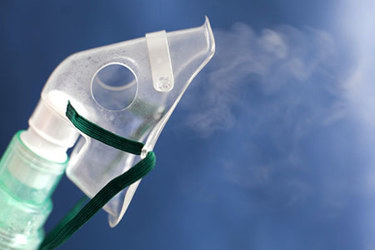
In the opening installment in this series, “Inquiries In Inhalation, Part 1: The Breadth Of Breath,” I explored the expanding range of therapeutic indications, both local and systemic, targetable via oral and nasal inhalation. I ended that commentary pointing to key considerations when it comes to innovating around the science and technology of inhalation drug delivery to reach these targets.
Especially given the increasing need and demand for advanced, biologics-based therapies delivered conveniently and cost-effectively outside of clinical settings, those considerations for inhalation drug and delivery development include the following:
- molecule size / particle engineering
- patient access
- device usability
- ecosystem coordination across drug and device development, manufacturing, and supply chain providers and partners
Here in Part 2, I’ll pick up those threads.
Inhaled Biologics: (How) Are We Getting There?
As I did in Part 1, I’ll reflect here on comments made by panelists during the Drug Delivery Leader Live online event I hosted and moderated, Just Breathe: Increasing Efficacy And Expanding Targets With Inhalation Delivery.
One of the panelists, Stephen Stein, had previously joined me on a videocast episode and had talked about the accelerated interest in and advanced capabilities for delivering large molecule biologics in traditional inhalation devices such as metered dose inhalers (MDIs) and dry powder inhalers (DPIs). So, reflecting the interests of the online audience for the subsequent Live event, I asked Stein to update us on progress made, current status, and emerging possibilities in the inhaled biologics arena.
Stein pointed to increased stability in particle engineering, enhanced by techniques including spray drying, as a notable contributor to inhalation devices’ technical ability to keep pace with the increased complexity in formulation science. “In terms of high dose delivery, there are spray drying technologies that can allow for particles to be obtained that are readily dispersible and can be delivered with relatively simple devices and get up into the tens of milligrams of dose delivered to the lung,” he explained. “So, that expands the range of molecules that can be delivered via inhalation.”
Technical Advances Yield Greater Patient Access
Combining considerations of formulation science with those of patient convenience and accessibility, Stein went on to illustrate the benefit of biologics delivery via inhalation with the example of vaccines. “Using particle engineering via spray drying, room temperature stable vaccines can be produced for vaccines that otherwise might require cold chain storage,” he explained. “That really can open up access of vaccines to portions of the world’s patients [for which] cold chain requirements can make distribution prohibitive, if not impossible.” (For Stein’s full response in context, watch the Live event segment “Advancing Inhalation Delivery For Respiratory Indications.”)
Bolstering Bioavailability
Another panelist who had previously joined me for a videocast appearance, Geraldine Venthoye, agreed that a goal of biologics delivery is “no reliance on cold chain, so, ultimately, to move some of these liquid formulations into dry powders.” Venthoye acknowledged that there are still significant questions to be answered in the area of inhalation formulation science, especially regarding large molecule stability in relation to bioavailability:
“We are constrained in the total amount of bioavailability that we're going to achieve with these macro molecules if they get too big,” she stated. “The potential is great there, but there's still so much we don't know. We don't know everything that we need to know about keeping those molecules stable [and] conserving their potency — similar concerns that we have in the injectable field, actually.”
Beyond questions of formulation stability through the chain of distribution and delivery come questions about how well an inhaled biologic will work — how bioavailable it will be — upon arrival at the target site in the patient. Reiterating the need for further understanding, Venthoye asserted, “We don't know everything we need to know about the excipients that will be needed for that, not just in terms of conserving the potency and the stability, but also to avoid certain things once they are inhaled and deposited in terms of aggregation or immunogenicity.”
Managing The Mucosa To Enable Intracellular Delivery
Referring specifically to intracellular delivery, Venthoye underscored the challenge of obtaining desired mucopenetration, the ability for inhaled particles to make their way through the lung or nasal mucosa to deliver their biologics payloads, without unwanted effects. “In terms of the [nanoparticles] that would actually need to get into cells and replicate and transfect, there's this whole thing that we need to understand about formulation,” she said.
To illustrate, Venthoye then moved to the example of nasal inhalation. “We talk about the nose being a simpler anatomy. But it also requires targeting in terms of where we would need to get the right amount of dose and also be retained and not cleared by mucociliary clearance,” she explained. “We don't know everything we need to know about how these payloads will then be released — how to keep something encapsulated and protected but then also allow it to be released so you do get the effects that you need to get, especially if they're intracellular.”
(Venthoye’s comments within the full context can be viewed in the Live event segment “Increasing Precision In Inhalation Delivery.”)
Nebulizers And Sprays: It’s All About The Droplets
As Venthoye’s comments help to show, there are certainly significant questions still to be answered and problems still to be solved along the way of moving the dial of innovation for inhalation delivery. The good news, as they say, is that diligent efforts at innovation are underway among individuals and organizations in the delivery device design and development space. Thankfully, my role here at Drug Delivery Leader provides me with a platform from which to inquire and report back on what I discover is in motion out there.
One such recent set of illuminations came by way of a videocast conversation I had with CEO Andrea Cusack from inhalation device developer Nebu-Flow. (See “Decreasing Nebulizer Size, Increasing Therapeutic Targets.”)
As the company’s name reveals, the focus there is on innovation in nebulizer technology. I won’t go deep into the design details here (the aforementioned videocast provides more of that). But as I understand it, the general approach at Nebu-Flow combines relying on acoustic wave technology while not relying on large reservoirs and compressor pumps and the like. Among the intended benefits to patients of these design features is transforming traditional, backpack-sized nebulizers into something much more portable and user-friendly, akin to the lesser burden we might think of as characteristic of transporting, say, a cellphone accompanied, if at all, only by a small charging unit.
Sizing Up (Or Down) Nebulizer Droplets For Biologics Delivery
Although I am always interested in those kinds of advances in device usability, my main interest in speaking with Cusack was to gain her perspective on the potential for nebulization technology to handle the delivery of advanced therapies. Having already underscored the company’s commitment to serving unmet needs with nebulizer-delivered biologics, Cusack had this to say about that:
“We have a basis to tune droplet size. The known range for respiratory is really one to five microns. And most of the devices — it doesn't matter whether it's a nebulizer, an MDI, or a DPI — are really delivering the larger end of that range,” she explained. “At the larger end, we [are] focused, with respect to biologics, on wanting to be able to get high efficiency, in both upper and lower airways, and direct to the alveola, which, of course, from an RNA perspective, can aid efficiency in terms of delivery and transfection. Assuming — and I don't say this lightly — assuming you have the right drug delivery formulation, and you are able to pass by the mucosal layer.”
Targeting Nasal Coverage: A Matter Of Distance And Dispersion
Not long after speaking with Cusack about advances in nebulization science and technology designed to increase delivery efficiency to target sites via the lungs, I had a conversation about approaches to nasal inhalation similarly designed to increase delivery accuracy. I caught up with another featured guest from a previous videocast, Rick Geoffrion, CEO of nasal spray device developer Cyrano Therapeutics. At the aptly and (to my mind) playfully named Cyrano, the focus is on treating patients for post-viral smell loss. (See “Intranasal Delivery for Post-Viral Smell Loss.”)
As I recalled from my earlier conversation with Geoffrion, key advances being worked on there include reducing droplet size in order to reach more effectively the olfactory receptors at the top of the nasal passageway. In our catch-up, Geoffrion described the device design and its intended effect of, as he put it, “beautiful wafting” in this way:
“We put a tiny little silicon chip, that little black dot, if you recall — not electrical, it’s a mechanical thing. And we put little holes in it, little 4-micron holes [that] bring the droplet size down to 10 to 40 microns,” he explained. “Now we're getting even coverage all across the olfactory region, so we know that we're delivering our drug to the right place.”
While CNS (central nervous system) disorders are not the company’s focus, Geoffrion acknowledged efforts underway by others to leverage nasal spray technologies as a way of circumventing the blood-brain barrier to reach CNS targets in the brain. And, again, though not referring to CNS disorder Parkinson’s disease as a target for Cyrano’s technology per se, Geoffrion did note that one of the common early symptoms of Parkinson’s, smell loss, presents an interesting potential treatment opportunity. Here is Geoffrion’s response when I asked about other possible applications of the nasal spray in development at Cyrano:
“Studies have shown that, if you're five or ten years down the road and you've lost your sense of smell due to Parkinson's, your olfactory bulb size has not changed. But, if you have post-viral smell loss and you're five or ten years down the road, your olfactory bulb will likely have reduced in size. It can come back if your smell improves, but it has reduced some because it's not being used.
“But interesting, in Parkinson's, that reduction doesn't happen, which suggests that the olfactory system may actually still be working. So, the question is, can we overcome that with our therapy? We’re investigating that right now.”
Creating Conditions For Inhalation Innovation
Beyond (while still including) innovation efforts underway at product development organizations such as Nebu-Flow and Cyrano Therapeutics, I am curious to know how well positioned or coordinated is the broader ecosystem of contributors and providers to advance inhalation delivery? At the aforementioned online panel event, we discussed key factors that may serve as either opportunities for advancements or barriers to progress — or perhaps both in the same instance. (For the full panel exchange on the inhalation industry as a whole, view the Live event segment “The Current State Of Inhalation Technology Innovation.”)
Panelist David Morton pointed to commonly deployed platform delivery technologies (e.g., several types of inhalers, such as metered dose, dry powder, plus nasal spray devices) as examples of having the potential to be both a help and a hindrance. “I do think that we are still constrained by the fact that we have these platforms and programmed way of thinking,” Morton said as he wondered aloud, “Are we able to think outside of that box? Is there opportunity to really rethink some of these things?”
To illustrate his questions about the wisdom of relying on existing technology in attempts to advance technology, Morton highlighted the relationship between simplicity and complexity in product design, development, and, ultimately, commercialization. “I think we do tend to overthink things in terms of complexity. I've been passionate about the idea of simplifying,” he asserted.
Morton then pointed to cost as a potential baseline guide to striking the right balance between “keep it simple” and “make it better.” He explained, “So I think price is a critical enabler of access. And I think the tendency is when we get all the scientists together, we tend to add onto those platforms in a linear fashion, as opposed to rethinking from the start.” On the cost front, he added, “We don't perhaps think enough about sustainability, although we've now clearly got to focus on that.”
Selecting Device Technologies And Providers Early
Regarding the desire to avoid adding undue complexity when innovating on existing or new delivery technologies, panelist Geraldine Venthoye also commented on platform approaches to product development. She offered the reminder that the responsibility for innovating complex systems in a minimally complex way usually and increasingly falls to CDMO organizations. That reality makes the relationship between a biopharma product developer and its outsourcing partner for the delivery technology a critical one, particularly in terms of the timing of the engagement.
In commenting on timing, Venthoye echoed a common theme we’ve been reiterating here at Drug Delivery Leader; that is, the need for earlier collaboration around formulation and device alignment: “Many pharma companies these days, even in the injectable fields, do rely on technology companies and CDMOs to actually develop the platform to quite a mature state before they would actually want to apply it to one of their very valuable pipeline molecules,” Venthoye explained.
Injecting a word of caution about inordinate delay in aligning drug to delivery device, Venthoye offered, “Pharma companies are actually engaging post proof of concept, post phase two, whereas in inhalation, unlike in injectables, we've already set the formulation and the device by that stage.”
Weighing Opportunity Versus Risk In Product Innovation
Of course, any decision about whether or not to innovate and to what degree must, ultimately, be made at the intersection of medical science and biopharma business — of patients within markets. On the topic of seeming (or real) hesitation on the part of biopharma companies to explore or adopt delivery tech innovations, panelist Stephen Stein interjected an additional set of “reality check” considerations: put simply, regulatory risk versus market opportunity. As Stein reminded us, the appetite for additional risk brought on by innovation is likely different for utterly new products versus those that are more of a “me to” offering:
“Companies don't want to add risk to their molecule if it's unnecessary. So, some drivers of innovation are cases where the new product isn’t trying to match an existing product. You can add some innovation, but once a technology is on the market and has been demonstrated that it can be approved by regulators and work, that barrier significantly decreases.
“Being the first company to bring a new technology forward on a given drug molecule or a drug product — definitely there are some barriers there. But you can get some commercial differentiation. You have to weigh those things.”