
Managing Logistics For Personalized Therapies With Cryoport Systems' Dominic Clarke

By Tom von Gunden, Chief Editor, Drug Delivery Leader
In this episode of Supplier Horizons, Dominic Clarke, VP of Technical Operations at specialty supply chain provider Cryoport Systems, joins host Tom von Gunden to discuss logistics practices and challenges in getting CGTs (cell and gene therapies) and other advanced biologics to patients. Using autologous CAR-T therapies as primary example, Clarke describes needs and advances in the collection, transport, manufacturing, cold chain storage, and delivery of personalized medicines.
Episode Transcript
Tom von Gunden, Chief Editor, Drug Delivery Leader
Welcome to another episode of Supplier Horizons. My name is Tom von Gunden, Chief Editor at Drug Delivery Leader and your host for the series. Today, I am pleased to be joined by Dominic Clarke, who is VP of Technical Operations at Cryoport Systems, which is a specialty supply chain provider, including providing cold chain solutions for complex biologics.
Welcome, Dominic.
Dominic Clarke, VP of Technical Operations, Cryoport Systems
Thanks, Tom. It's a pleasure to be here, and I appreciate the opportunity to speak today.
Well, it's my pleasure to have you here.
I mentioned advanced biologics, so let's start there. Dominic, as you know, I became familiar with you through a white paper that you were consulted to contribute to, published by Phacilitate, called “The Science is Proven. The Systems are Not: Advanced Therapies at a Commercial Crossroads.” Our audience at Drug Delivery Leader and I, of course, personally am interested in some of the challenges and opportunities to get advanced therapies to patients who need them and some of the complexity around distribution and supply chain.
So, thinking in particular about cell and gene therapies and other advanced biologics: you and I talked about perhaps illustrating some of the complexity and the challenges and opportunities with CAR-T therapies for oncology. I think lots of people are familiar with that.
So, starting there with that as an illustrative example: How are these therapies typically delivered? Just give us a bit of a reminder so people understand what's involved in getting that kind of a treatment to a patient.
Yes. Thanks. That's a good question. You mentioned CAR-T, but perhaps just briefly before we dive into the CAR-T specifically, maybe I'll start off with a little bit of a broader observation,
which did emerge from the recent white paper that was published by Phacilitate, which you mentioned, and I helped support creating that.
One of the central messages of that paper is that advanced therapies have delivered some of the most significant medical breakthroughs of our time. But along with that, the clinical evidence continues to grow, the science has proven itself, it's real, and we demonstrated these therapies can fundamentally change patient outcomes.
What we're learning though, however, and what we discussed is it's not the science that's really the challenge anymore. Of course, there's tons of innovation there, but It alone doesn't guarantee the patient access. For years, the industry's primary focus was proving the biology, and that's what we thought about: the manufacturing, we can engineer cells to eliminate cancer. Could we correct genetic defects? Could we modify the immune system to treat disease?
But today, many of those questions have compelling clinical answers. We see it, and the proof is there. The challenge, though, has shifted towards manufacturability. But beyond that, it's the scalability. It’s the patient access. Then you get into the healthcare infrastructures. I'm sure many of your viewers understand, it's just different, right? And so, reimbursement, logistics, we'll talk about, and then operational execution.
So, in many ways, we're where we are. The advanced therapies, they've evolved from being more purely scientific innovation to a healthcare delivery challenge.
I think that's where the CAR-T therapy is perhaps the most relevant example of this challenge because it brings together all of those elements into a single patient journey. It's not
just a drug that's being shipped from a manufacturer to a hospital. That's more what we're used to, right? But in a highly personalized therapy, where the patient's own cells become part of the manufacturing process, that requires an extreme amount of coordination across the entire ecosystem.
Just using that to set the stage, using the CAR-T, the autologous CAR-T therapies are uniquely suited because every treatment is manufactured specifically for an individual patient.
It's not like traditional pharma, right? So, it's unique. And so, where you have traditional pharma, you have a number of millions of identical doses. It can be produced and distributed globally. CAR-T therapy starts with a patient, and it ends with that same patient.
So, as you asked, the process begins with leukapheresis. It's where the patient's immune cells, which includes the T cells, are collected. At that point, then that product is transported to a manufacturing facility. It may include a step along the way where that fresh material gets cryopreserved and frozen.
But, again, it eventually makes it to the manufacturing facility, where then they perform their magic, right? The genetic engineering to allow it to recognize and kill the cancer cells. And then once it's modified, those cells are expanded. They're tested for quality. They're then prepared to ship back to the patient or the treating physician in hospital. And then the patient undergoes additional conditioning therapy, which all has to be coordinated before finally receiving the infusion of that product.
So, it’s a combination of a whole bunch of steps. The remarkable and challenging aspect at the same time is that every one of these steps has to occur under tightly controlled conditions.
We’re not just simply moving the drug through the supply chain. We're moving that living biological material — that's the unique component of all this — through the global network of a variety of collection centers, manufacturers, logistics providers, and the treatment centers.
And so, the patient is effectively becoming and becomes part of the manufacturing process itself.
Yes. So, I'm going to lean on your title there as VP of Technical Operations and ask if you could illustrate some of the key kinds of technical challenges that you and the folks at Cryoport Systems think about on a daily basis and try to move the dial on.
Can you illustrate some of the key pieces that you folks would contribute to, then wrap your heads around how to move it forward when it comes to everything you just described about collecting cells and getting them back to a patient after they've been modified?
Yeah, I'll talk some specifically, and then maybe some of the other challenges that we collectively help along with the industry as a whole. I think the biggest misconception is, typically, that manufacturing is the only challenge. It’s certainly important, but as we talked about, it's really the entire ecosystem that has to function flawlessly.
We’re constantly thinking about that because, as I mentioned the steps along the way, for Cryoport we are integrated into all of the aspects of making sure that the product we’re helping, we're one of many that help move this product from the patient to the manufacturing and back to the patient. And all that has to be well coordinated.
So, you could think of a number of different aspects that fit into that, aside from just the logistics components and the shippers. In order to ensure that you maintain the proper temperature and ensure that — that's a key one, right? If the temperature is not monitored, the stability of that living cell or cells can severely be impacted. And so, your entire quality of that product can be damaged right away if you're not maintaining the proper chain of
custody, chain of handling the temperatures.
Many have worked with this to build the appropriate shippers that now monitor all of the different aspects that you can imagine, right? Initially, years ago, these were just
shippers. They maintained a temperature, and we had a good idea of how long they could maintain that specific temperature.
Now, you have monitors that tell you exactly what that temperature is, if it has been tipped, if it has been vibrated, where it is along the journey. So, it's those advances that have really helped. But we're continually building on that.
What is the broader commonality or broader applicability of some of these things that we're talking about, in terms of how lessons learned in CAR-T and other, right in front of us kinds of scenarios might be broadened to complex delivery and supply chain solutions generally?
If we’re talking about some of the perhaps innovations or aspects that are helping us move forward, I think some of the important aspects that are happening, and how it's going to help go beyond things like CAR T: It’s not necessarily occurring from the therapy itself, but certainly more so around the therapy.
So, for instance, again I'll reflect back a little bit on what we're doing. But just using a specific example: Again, if we're thinking about living biologics, whether it's a CAR-T or another cell-based therapy, maintaining that stability, especially when you need flexibility, because you don't know when a patient's going to be available to either provide it or to receive that therapy in the end.
One of the pieces that continues to evolve is working from a starting fresh material. So, you collect your leukapheresis, your blood product. Typically, that's collected, it's fresh, and it's shipped to the manufacturer. But, again, delays happen. And now, what do you do, right?
And so, we've seen this throughout the industry. Some of the advances and innovations have been around the cryopreservation technologies. For example, not just using fresh, but now cryopreserving and preserving that starting material. That enables more flexibility, maintains the quality, and helps you to be able to line up your manufacturing slots and be better prepared to have it available for the patient when they're ready.
So, we're making progress there in different designs of the technologies, as well as standardization of the offerings themselves. These oftentimes sound a whole lot less exciting than, say, the genetic engineering breakthroughs that are continually happening — going from a single edit to now multiple edits and being able to turn the therapy on and off. But I think they all equally, as we found, play a critical role in determining whether these therapies are truly going to be able to reach the patient.
So, I think that's one of the aspects that's going to apply to just about any personalized therapy that's going to use a starting material that comes from the human, the living biologic.
Coupled with that, other things that help and that are building: There are advancements in automation. We're continually building that because as this is going to scale, again, regardless of CAR-T today or autologous or allogeneic aspects in the future, in vivo, we need automation to be able to scale.
Then you need your data integration platforms to build. You need predictive monitoring, both on the front end and the back end. So, all of these are actively being evaluated and improved, and that’s only going to help us as we build this industry into more mainstream.
Gotcha. You covered a lot of ground there in terms of what advances could continue to move the dial and maybe already have.
I like to end these kinds of conversations with a look out onto the horizon, whether that’s the near horizon or the far horizon, however close we are to the next stage. Looking out over the healthcare infrastructure and patient treatment landscape, what do you envision in terms of potential impact should some of these advances continue and have impact in the treatment landscape? What would you point to, if we could really move the dial here or there, or solve this or that challenge, that could really matter?
Good question. Obviously, you automatically think about the science. Again, that’s fundamental. That’s what you think about. That’s where it drives everything.
The reality, I think, is that the future is going to require innovation from multiple dimensions at the same time. So, of course, we’re going to continue to see breakthroughs in gene editing, cell engineering, in vivo therapies. These are all happening today. We’re going to see the impact of those, and it’s going to enable more patients to receive more therapies. So, they all have the potential to dramatically expand the range of diseases that can be treated.
But what I think about is the innovation in the manufacturing, again, and the logistics and the healthcare infrastructure. Those all have to fundamentally change in order for us to do this.
We’re used to what has been the standard of healthcare for a long time. So, as we move forward towards automated facilities, greater digital integration, smarter monitoring systems, and ultimately the more decentralized treatment models that we’re looking at, that’s going bring these therapies closer to the patients. I think we’re entering that period where collaboration also becomes a truly competitive advantage.
Whether you think about Cryoport or any other entity that’s out there, it’s not going to be a single organization. We know that we used to try to be the expert on everything. But in order to solve the challenges, it’s going to require good collaboration amongst everybody to succeed, and whoever does that will have the advantage.
Well, it all sounds very promising. Dominic, thanks for joining me to share your perspectives and insights on the opportunities and challenges out there. And I also want to thank our audience at Drug Delivery Leader for joining for another episode of Supplier Horizons. And we'll see you next time.
About The Featured Guest
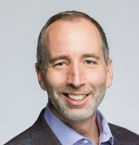 Dr. Dominic Clarke has over two decades of experience in the Cell & Gene Therapy sector. He currently serves as the Associate Chief Scientific Officer for Cryoport Inc. and Vice President of Technical Operations, IntegriCell at Cryoport Systems leading the technical development, MSAT and operational services. He earned his PhD in cell and molecular biology at the State University of New York specializing in cryopreservation and low-temperature biology and completed a post-doc in developmental biology at Syracuse Upstate Medical University. For the past 15 years, Dominic has been an active member of the International Society for Cell & Gene Therapies (ISCT) Process Development and Manufacturing industry committee, where he serves as the committee chair.