
Rethinking GLP-1 Delivery Beyond The Needle
By Ilana Schachter, RDN, Consumer Health Digest
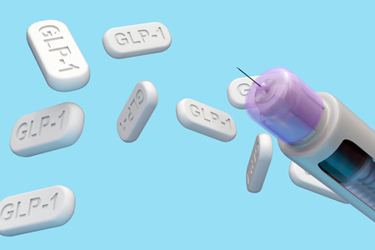
Glucagon-like peptide-1 (GLP-1) medications have changed the treatment landscape for obesity and type 2 diabetes. Much of the conversation so far has focused on how effective these drugs are at reducing appetite, improving glycemic control, and producing weight loss. As more GLP-1 therapies move through development, however, another question is becoming increasingly important: How can we deliver these drugs more reliably, conveniently, and safely?
For drug developers, that means looking beyond the active ingredient itself. Route of administration, absorption, bioavailability, dosing conditions, tolerability, and patient use all influence how a therapy performs in the real world.
Oral Delivery Is Possible, But Absorption Remains A Challenge
The development of oral semaglutide demonstrated that a peptide drug does not necessarily have to be injected. But getting a large peptide across the gastrointestinal tract is difficult. Peptides can be broken down by digestive enzymes and generally have poor permeability across the intestinal epithelium.¹˒²
Oral semaglutide uses the absorption enhancer sodium N-[8-(2-hydroxybenzoyl)amino]caprylate (SNAC) to help address some of these barriers. SNAC can temporarily alter the local gastric environment and promote absorption of semaglutide through the stomach.¹˒²˒³
Even with this approach, bioavailability is very low. Published reviews estimate oral semaglutide's absolute bioavailability at roughly 0.4% to 1% under optimized conditions, compared with substantially higher exposure after subcutaneous administration. Food can also have a major effect on absorption, which is why oral semaglutide has specific instructions regarding fasting, water volume, and the timing of food and other medications.¹˒⁴˒⁵
That creates an important development question: How much of the burden of achieving consistent drug exposure should fall on the patient?
A formulation that works well under tightly controlled conditions may behave differently when someone takes it after breakfast, with a different amount of water, or alongside another medication. Reducing those variables could be just as important as improving the absolute amount of drug absorbed.¹˒²˒³
The Formulation May Matter As Much As The Molecule
There is considerable interest in technologies that could make oral peptide delivery more predictable. Researchers are investigating approaches including permeation enhancers, enteric and gut-targeted formulations, nanocarriers, mucoadhesive systems, enzyme inhibitors, and other ways of protecting peptides from degradation and improving epithelial uptake.²˒³˒⁴
Other approaches are moving away from traditional oral dosing altogether. Microneedles, long-acting delivery systems, hydrogels, and nano- or microcarrier systems are being explored as potential ways to change how GLP-1 therapies reach the body. Much of this work is still early, so questions about manufacturing, scalability, long-term safety, and consistent drug release remain.²˒⁴
The challenge is that improving absorption is not automatically an improvement in the product.
A more effective permeation strategy could also affect tolerability or introduce new safety considerations. A formulation that produces a higher peak concentration may have a different side-effect profile from one that produces slower, steadier exposure. A delivery system that protects a peptide particularly well in one part of the gastrointestinal tract may create other formulation or manufacturing challenges.²˒⁴˒⁵
In other words, bioavailability should not be treated as a single number to maximize. Developers also have to consider how consistent exposure is, how much it varies between patients, how food affects it, and what the resulting concentration-time profile means for both efficacy and tolerability.⁴˒⁵
Safety Signals Should Be Considered Early
The recent discussion around GLP-1 medications and non-arteritic anterior ischemic optic neuropathy (NAION) is a useful example of why safety surveillance matters as these therapies evolve.⁶
The evidence has not established that semaglutide causes NAION. In 2025, the World Health Organization reported that the European Medicines Agency had recommended adding NAION as a very rare adverse effect of semaglutide-containing medicines. Subsequent observational research has produced mixed results, including a 2026 systematic review that found no statistically significant overall association between semaglutide use and NAION, although the certainty of the evidence was very low.⁷
For drug developers, the broader lesson is not that one delivery system is responsible for a particular adverse event. It is that changes in formulation, absorption, exposure, and pharmacokinetics can all be relevant when evaluating safety signals.⁴˒⁵˒⁶
As new GLP-1 formulations are developed, it will be important to understand not only whether a product works, but also whether changes in exposure or delivery characteristics alter its safety profile.⁴˒⁵˒⁶
Weight Loss Is Only Part Of The Picture
There is another issue that should remain on the radar as GLP-1 therapies become more effective: What is actually being lost during weight loss?
Weight reduction can include both fat mass and lean mass. Loss of lean mass is not necessarily harmful in every circumstance, but preserving muscle and physical function becomes increasingly important when substantial weight loss occurs. Muscle plays an important role in mobility, strength, glucose metabolism, and overall physical function.
This is particularly relevant for drug development because body weight alone does not tell the whole story.
Clinical trials and post-market studies can provide a more useful picture when they look at outcomes such as body composition, strength, physical function, nutritional adequacy, and quality of life alongside weight and metabolic measures.
Resistance training and adequate protein intake are often discussed in this context, but they should not be viewed as interchangeable. Protein alone does not provide the same stimulus for maintaining muscle as resistance exercise, and the appropriate nutritional strategy will vary based on factors such as age, body composition, kidney function, activity level, and the rate of weight loss.

Appetite Suppression Creates A Nutritional Consideration, Too
One of the defining effects of GLP-1 therapy is reduced appetite. That is part of what makes these medications effective, but it can also make it harder for some people to consume enough protein, micronutrients, fluids, and overall energy to support their health.
Gastrointestinal symptoms such as nausea, vomiting, constipation, and diarrhea can add another layer of difficulty.
This is where nutrition support can become particularly useful. I believe periodic access to a registered dietitian should be considered as part of comprehensive GLP-1 treatment, particularly around treatment initiation, dose escalation, substantial weight loss, and maintenance. The frequency does not need to be identical for every patient.
From a broader product-development perspective, this also raises an interesting point: the medication does not operate in isolation. Its effects on appetite, food intake, gastrointestinal function, and body composition can influence the nutritional environment in which the drug is being used.
The Patient Experience Is Part Of Delivery
A technically successful delivery system still has to work for the person using it.
For an oral product, that might mean minimizing fasting requirements and reducing sensitivity to food or water volume. For an injectable, it could mean improving injection frequency, device usability, storage requirements, or administration time. For newer delivery systems, developers will need to consider whether the technology actually makes treatment easier rather than simply making it more sophisticated.¹˒²˒⁴
These details can affect adherence. They can also affect how a drug performs outside a clinical trial, where patients are not following perfectly controlled administration conditions.¹˒⁴˒⁵
The future of GLP-1 delivery is therefore not simply about finding a way to replace the needle. It is about finding delivery systems that provide reliable exposure while reducing unnecessary patient burden and maintaining a favorable safety and tolerability profile.²˒⁴˒⁵
What Comes Next
GLP-1 development is entering a stage where the delivery system deserves as much attention as the drug itself.
Oral formulations, permeation-enhancing technologies, nanocarriers, microneedles, and longer-acting systems all offer potential ways to improve treatment. But each approach introduces its own questions around absorption, variability, safety, manufacturing, usability, and long-term performance.²˒³˒⁴
For formulators and drug-delivery teams, the goal should not simply be to get more drug into the bloodstream. It should be to determine how much drug gets there, how consistently it gets there, how quickly it gets there, and what happens when real patients use the product under real-world conditions.⁴˒⁵
That may ultimately be what separates the next generation of GLP-1 therapies from simply being different formulations of the same drugs.
References:
- Solis-Herrera et al., 2024 — “Current Understanding of SNAC as an Absorption Enhancer: The Oral Semaglutide Experience.” pmc.ncbi.nlm.nih.gov/articles/PMC10788673/
- Ke et al., 2024 — “Peptide GLP-1 receptor agonists: From injection to oral delivery strategies.” pubmed.ncbi.nlm.nih.gov/39127152/
- Sandmeier et al., 2025 — “Design of self-emulsifying oral delivery systems for semaglutide: reverse micelles versus hydrophobic ion pairs.” pubmed.ncbi.nlm.nih.gov/39427069/
- 2026 — “Semaglutide Bioavailability: Limitations, Formulation Innovation and Future Opportunities.” pubmed.ncbi.nlm.nih.gov/42687069/
- 2026 — “Steady-state pharmacokinetics of oral semaglutide using semi-mechanistic pharmacokinetic modelling and population simulations.” pubmed.ncbi.nlm.nih.gov/42233942/
- World Health Organization, 2025 — “Semaglutide medicines and risk of NAION.” www.who.int/philippines/news/detail-global/27-06-2025-27-06-2025-semaglutide-medicines-naion
- Abdelaal A, Abu Serhan H, Alsaadi M, Yaldo L, Gaier ED, Elhusseiny AM. Semaglutide and the Risk of Nonarteritic Ischemic Optic Neuropathy: A Systematic Review and Certainty of Evidence Meta-Analysis. Ophthalmology. 2026;133(6):799–810. doi:10.1016/j.ophtha.2026.02.013.
About The Author:
 Ilana Schachter, RDN, is a registered dietitian and nutritionist for Consumer Health Digest and also provides individualized nutrition counseling through her private practice. She takes a personalized, evidence-based approach to helping clients navigate their unique nutrition needs, build sustainable habits, and achieve their health and wellness goals.