
Spine Care Redefined: Autologous Cell Therapy For Degenerative Disc Disease
By Lance Alstodt, President and CEO, BioRestorative Therapies
Chronic lower back pain remains one of the most persistent and costly challenges in global healthcare. Approximately 266 million people (3.63% of the global population) annually, and over 30 million adults in the U.S. alone, suffer from chronic lower back pain. Patients report pain that significantly impacts their job, family obligations, ability to travel, and overall quality of life. There is an unmet medical need for lower back pain, and it sits at the intersection of musculoskeletal degeneration, chronic pain management, and healthcare system inefficiency. Despite its prevalence, therapeutic innovation in this space has lagged behind other disease areas, such as oncology or genetic disorders.
The reason is not a lack of intervention but rather a lack of efficacy. Current treatment paradigms rely heavily on a progression from conservative management like anti-inflammatory drugs, opioids, steroid injections, and physical therapy to invasive surgical procedures. These approaches, while often necessary, largely focus on symptom mitigation rather than resolution of the underlying pathology.
Within this care landscape, emerging autologous cell therapies are introducing a new framework that places drug delivery and biological targeting at the center of therapeutic design. Among these approaches, programs such as BRTX-100 from BioRestorative Therapies highlight how delivery strategy, route of administration, and biological compatibility can converge to create a fundamentally different treatment paradigm.
The Delivery Problem In Degenerative Disc Disease
Degenerative disc disease (DDD) is more than a structural issue; it is also a biological issue. The intervertebral disc, particularly the nucleus pulposus, exists in a uniquely hostile microenvironment. It is avascular, low in oxygen, acidic, and nutrient-poor, conditions that make it very difficult for externally delivered therapeutics to function effectively.
Traditional pharmacologic approaches do not directly engage with this environment. Oral medications and systemic therapies distribute broadly throughout the body, diluting their impact at the site of pathology. Even localized interventions, such as epidural steroid injections, primarily aim to reduce inflammation in surrounding tissues rather than repair the disc itself.
From a drug delivery perspective, this represents a fundamental mismatch: the site of disease is highly localized and biologically complex, yet most therapies are either systemic or indirectly targeted.
Route Of Administration As A Therapeutic Strategy
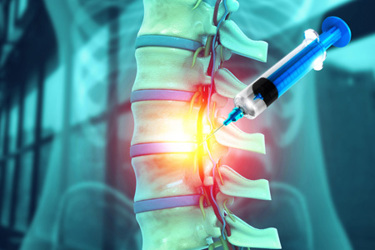
Autologous cell therapies introduce a more precise delivery model. The cells can be administered via direct intradiscal injection into the nucleus pulposus, guided by fluoroscopy.
This route of administration is significant for several reasons. First, it bypasses systemic circulation entirely, ensuring that the therapeutic payload is delivered exactly where it is needed. Second, it allows for a concentrated, high-density dose, in our case, tens of millions of expanded mesenchymal stem cells combined with autologous platelet-derived components, to be placed directly within the diseased tissue.
From a delivery science standpoint, this represents a shift from passive distribution to active placement. The therapeutic is not reliant on vascular transport, receptor-mediated uptake, or diffusion gradients. Instead, it is physically positioned within the target environment.
This approach is particularly relevant in tissues like the intervertebral disc, where traditional delivery mechanisms are inherently limited. By overcoming the structural barriers to drug access, intradiscal injection enables a level of targeting that is difficult to achieve through other modalities.
Engineering Cells For A Hostile Environment
Delivery is only part of the equation. The success of any therapy also depends on its ability to function within the target environment after administration.
One of the defining features of this autologous approach is the ex vivo conditioning of cells prior to delivery. Our mesenchymal stem cells are harvested from the patient’s bone marrow and expanded under hypoxic (low oxygen) culture conditions. This process is designed to enhance cellular resilience, effectively “training” the cells to survive in the harsh conditions they will encounter within the disc. The hypoxic culture is one of the key differentiators from previous clinical studies in autologous therapy for disc disease that were unsuccessful in their Phase 2 trials.
From a drug delivery perspective, this is analogous to optimizing the stability of a biologic before administration. Instead of modifying a formulation, the therapy modifies the biological characteristics of the payload itself.
The result is a therapeutic that is not only precisely delivered but also biologically prepared for its destination. This combination of targeted placement and environmental adaptation is central to its potential effectiveness.

Targeting The Root Cause, Not The Symptoms
Another key distinction between autologous cell therapy and conventional treatments lies in what is being targeted.
Most existing interventions for chronic back pain focus on downstream effects, namely, inflammation and pain signaling. Opioids alter perception of pain, anti-inflammatories reduce inflammatory mediators, and steroids modulate immune response. While these approaches can provide relief, they do not address the structural and cellular degeneration within the disc and each present their own challenges for long-term treatment.
In contrast, intradiscal cell therapy targets the site of pathology itself. By delivering regenerative cells directly into the nucleus pulposus, the therapy aims to restore the extracellular matrix, support structural integrity, and potentially reverse aspects of degeneration.
There is also emerging evidence suggesting that these cells may play a signaling role by interacting with resident cells and influencing local biological processes. In this sense, the therapy functions not only as a replacement mechanism but also as a regulator of the microenvironment.
The dual function of structural repair and biological signaling positions autologous cell therapy as a fundamentally unique type of therapeutic modality.
Autologous Vs. Allogeneic: Delivery And Compatibility
Another important consideration in delivery science is biocompatibility and safety. Autologous therapies, by definition, are derived from the patient’s own cells, which eliminates many of the concerns associated with allogeneic (donor-derived) products.
This compatibility may enhance both safety and efficacy because cells are inherently matched to the patient’s biological environment, reducing the risk of rejection or adverse immune response. It also introduces the possibility of improved integration and persistence within the target tissue.
While allogeneic therapies offer advantages in scalability and convenience, they introduce additional variables related to immune compatibility and long-term efficacy and behavior. Whereas autologous approaches prioritize biological alignment, even if they require more complex manufacturing workflows.
This trade-off highlights a broader question in drug delivery about whether the future lies in standardized off-the-shelf solutions or more personalized patient-specific therapies.
Patient Experience As A Function Of Delivery
Delivery strategy impacts the patient experience and recovery. In the case of intradiscal autologous therapy, the treatment pathway differs significantly from both conservative management and surgical intervention.
The process begins with a bone marrow aspiration and blood draw; both procedures are considered brief and minimally invasive. The collected material is then processed and expanded in a laboratory setting before being returned for administration.
The final delivery step is a single outpatient injection, performed under imaging guidance. Compared to surgical procedures such as spinal fusion or disc replacement, which can involve lengthy recovery times, high costs, and significant physical burden and physical therapy, this approach is notably less invasive. Patients typically can resume normal activity relatively quickly. By minimizing invasiveness while maximizing targeting, the therapy aligns clinical objectives with patient-centered outcomes.
Bridging The Gap Between Conservative And Surgical Care
One of the most compelling aspects of this approach is its position within the treatment continuum.
Today’s standard of care often forces patients into a prolonged cycle of conservative therapies before escalating to surgery. This progression can take years, during which time the underlying condition may worsen.
Autologous intradiscal therapy introduces a potential intervention point between these extremes. It offers a biologically active treatment that is less invasive than surgery but more targeted than pharmacologic management, sooner in the pain management continuum.
From a healthcare system perspective, this could also have significant implications for reducing reliance on long-term pain management strategies, particularly opioid use, and delaying or avoiding surgery could improve both clinical outcomes and economic efficiency.
A Shift In How We Think About Delivery
The broader significance of this approach extends beyond spine care. It reflects a shift in how drug delivery is conceptualized in modern medicine. Rather than viewing delivery as a secondary consideration, it is increasingly being recognized as a core component of therapeutic design. Route of administration, targeting precision, biological compatibility, and patient experience are no longer peripheral concerns, they are central to the effectiveness of the therapy itself.
Autologous cell therapies exemplify this shift. They integrate delivery and biology into a single cohesive system, one in which the therapeutic is not only designed to act on the body but to function within it in a highly specific and localized way.
Looking Ahead
While clinical data will ultimately determine the long-term impact of these therapies, the underlying principles are already reshaping the conversation around drug delivery.
Intradiscal injection, hypoxic cell conditioning, and autologous sourcing represent a rethinking of how therapies can be delivered to complex localized disease environments.
For a condition as widespread and challenging as degenerative disc disease, this approach offers a new lens that prioritizes precision, biology, and patient experience in equal measure.
As regenerative medicine continues to evolve, the lessons learned from these delivery strategies may extend far beyond the spine with the potential to inform how future therapies are developed, delivered, and experienced across a wide range of diseases.
About The Author
 Lance Alstodt, BioRestorative Therapies president, chief executive officer, and chairman of the Board since 2020, brings over 25 years of experience in leading medical technology and life sciences companies in operations, capital raising activities, strategy, and mergers and acquisitions. Most recently, Mr. Alstodt was the founder and CEO of MedVest Consulting Corporation, an advisory and capital firm focused exclusively on the healthcare sector, focusing on growth and channel strategy, strategic planning, merger and acquisition support, and investor activities. Before MedVest, Mr. Alstodt was an investment banker with over 25 years of experience in healthcare investment banking, including mergers and acquisitions.