
The Advantages Of Antibodies Over Ligands In The Alpha Emitter Era
By Philip Kantoff, MD, CEO and cofounder, and Neil H. Bander, MD, senior scientific advisor and cofounder, Convergent Therapeutics
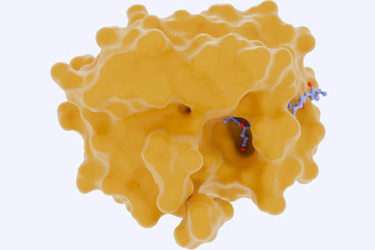
Alpha-emitting radiopharmaceuticals are moving quickly from theoretical promise to clinical reality — particularly in prostate cancer, where prostate-specific membrane antigen (PSMA) is a well-established therapeutic target. The excitement is understandable. Alpha particles deliver highly potent, highly focused radiation capable of inducing double-strand DNA breaks, making them attractive for treating cancers resistant to other forms of therapy, including other forms of radiation. In addition, alpha particles are particularly effective in treating micro-metastatic lesions that are difficult to eradicate with other approaches,1,2 including beta emitters such as lutetium-177 (Lu-177), where effective energy deposition dramatically decreases within a short range (≤2 mm) in tissues.3
As the field advances, however, we believe we cannot ignore a foundational question, one that will increasingly determine whether alpha therapies, particularly long half-life isotopes like actinium-225 (Ac-225), can move beyond proof-of-concept and into widespread clinical use. The question at hand is how to best deliver the isotope.
Most PSMA-targeted Ac-225 programs today rely on small molecule ligands, largely a consequence of development assumptions derived from the use of beta-emitters such as Lu-177. Closer scrutiny of this choice is required as the delivery modality matters more when the more potent alphas are used.
Why Alpha Radiation Forces A Reconsideration
The physical properties of alpha particles are fundamentally different from betas. Alpha particles deliver very high linear energy transfer — several orders of magnitude more powerful than beta particles — over a short path length of only a few cell diameters. This massive relative increase in energy deposition mandates a very high level of delivery specificity.
With beta emitters, some degree of off-tumor exposure can be tolerated. Alpha emitters do not provide the same flexibility regarding on-target, off-tumor exposure, which has practical implications.
For example, on-target, off-tumor uptake that was an inconvenience with beta-emitting particles may become dose-limiting or intolerable with alphas. Clearance pathways that were previously considered acceptable become potential liabilities. These constraints grow more, not less, important as developers consider repeated dosing, combinations with other therapies, or, in particular, use earlier in the disease course where quality of life is an even greater consideration.
Yet many alpha programs continue to assume that delivery strategies optimized for beta radiation will translate to alpha radiation. That assumption is increasingly difficult to defend.
As clinical experience with PSMA-targeted alpha small molecule ligands grows, certain patterns are emerging. Salivary gland toxicity, particularly xerostomia, has been reported frequently and in many cases appears cumulative, severe, and irreversible.4,5 In addition, renal exposure remains an area of significant concern. This is especially true as dosing intensifies or treatment is repeated, given that small molecule ligands are cleared through the renal tubules, which is a site of high PSMA expression.
These observations should not be viewed as isolated safety issues or as shortcomings of individual programs. They are signals that alpha radiation exposes weaknesses in delivery strategies that were never designed with this level of potency in mind.
The Ligand Default And Its Underlying Assumptions
Small molecule ligands became dominant in PSMA radiopharma for good reasons. They are relatively straightforward to design and manufacture, enable rapid tumor uptake, and prompt clearance, thereby providing ideal imaging agents. In the beta setting, these attributes translated into clinical benefit culminating in the approval and adoption of lutetium-177–based PSMA therapies.4
Ligands are also optimized for speed. Their small size allows them to move quickly through circulation and tissues, bind PSMA efficiently, and clear rapidly. For beta emitters, this combination worked well enough to deliver therapeutic benefits with acceptable tolerability.
However, these same properties may be misaligned with the demands of alpha radiation. Rapid systemic distribution results in the ligand binding to PSMA target sites on normal tissues, leading to alpha decay outside the tumor, radiation exposure of normal tissues, and intolerable side effects. Renal filtration and salivary gland uptake, arguably tolerable with beta particles, become far more consequential when paired with alpha emitters. The fast clearance of ligands limits tumor exposure and their rapid recycling out of tumor cells causes a short tumor cell residence time, forcing developers to compensate with higher doses that may narrow the therapeutic window.
None of these issues suggest that ligands are inherently flawed, rather that the criteria by which we evaluate delivery systems cannot take place in isolation; they need to evolve in complement to the modality itself.
Antibodies As A Differentiated Delivery Strategy
Antibodies provide a fundamentally different biodistribution profile from small molecules. Rather than the broader tissue distribution typical of small molecule ligands through all vascular beds (both normal and tumor), antibody distribution is more restricted and preferentially favors tumor tissue, which has abnormal, leaky tumor neo-vasculature. The size and structure of antibodies limit penetration into normal tissues, including the salivary and lacrimal glands, and they are not filtered by the kidneys. Their longer half-life provides longer tumor exposure, thereby providing increased tumor uptake. And, once internalized, antibodies demonstrate significantly longer tumor retention. They are also cleared through the hepatobiliary system, a less radiosensitive route than the kidneys.6
For alpha emitters, and specifically for Ac-225, these characteristics are advantageous. Longer tumor residence increases the likelihood that alpha decay occurs where it is intended. Reduced exposure to radiosensitive normal tissues can widen the margin between efficacy and toxicity. Slower systemic kinetics may allow for effective dosing with less total isotope.
Antibodies also offer flexibility in development. They can serve as backbones for combination strategies, including sequential or concurrent use with other systemic agents, such as beta emitters and immune therapies. This matters because durable disease control in cancers such as prostate cancer is not likely to come from monotherapy alone.
A Case Study In Alternative Thinking
At Convergent Therapeutics, these considerations shaped our decision to pursue an antibody-based PSMA-targeted alpha (Ac-225) therapy. That choice was informed by decades of work in PSMA biology and clinical prostate cancer, including early demonstration of internalization and tumor retention with PSMA-directed antibodies.7,8
The rationale was straightforward. If alpha radiation demands precision, then delivery should be optimized for controlled biodistribution and tumor retention. If therapies are to be used repeatedly, in combination, or earlier in disease, then tolerability must be designed into the platform rather than managed reactively.
Phase 2 data to be shared this year from our lead clinical program, CONV01-α, is intended to help establish an Ac-225-based radioantibody in metastatic castration-resistant prostate cancer, building upon previously demonstrated efficacy and tolerability,9 with the intent of advancing the asset toward pivotal studies.
Our approach is one example of how these principles can be applied in practice, illustrating the viability of alternatives to small molecule ligand-based delivery, which, if effectively harnessed, can provide important advances to the current standard of care — and potentially at different stages of disease.

Development Considerations For The Radiopharma Field
As alpha radiopharma matures, developers should be asking different questions than they did in the beta era.
First, biodistribution should be evaluated as a primary design variable, not a secondary optimization. Where does the isotope spend time, and where does it decay? Tumor uptake alone is not enough if on-target/off-tumor exposure limits dosing or repeat administration.
Second, particularly with longer half-life alphas such as Ac-225, tumor retention matters more than peak uptake. A delivery system that maintains sustained tumor presence at lower systemic exposure will likely outperform one that achieves high early uptake but clears quickly.
Third, tolerability is likely to become the gating factor for broader use. Early PSMA responses are encouraging, but durability, cumulative toxicity, and organ-specific effects will ultimately determine whether alpha therapies prove to be clinically effective and, moreover, move earlier in treatment or into combinations.
Finally, the delivery modality influences registrational risk. Regulators scrutinize safety margins closely, particularly for highly potent agents. Agents that deliver radiation to the kidney, where nephrotoxicity can take several years to manifest, will require long-term follow-up and pose a particular risk to treating earlier-stage cancer patients who have years of life expectancy. Platforms that offer predictable biodistribution and manageable toxicity profiles may be better positioned for late-stage development.
These considerations are not specific to PSMA or prostate cancer. They apply broadly across alpha-emitting radiopharmaceuticals and should inform how new programs are designed from the outset.
Looking Ahead
The alpha era in radiopharmaceuticals is still being defined. The choices developers make now about delivery platforms will shape not only individual programs but the trajectory of the field as a whole.
Alpha emitters offer extraordinary biological power. Harnessing that power safely and effectively requires matching the isotope to a delivery system designed for its unique properties. In our view, antibodies are an underappreciated option in that equation.
Whether antibodies ultimately prove superior will depend on clinical data. But if the field continues to default to small-molecule-ligand-first thinking without reassessing its assumptions, we risk limiting the full potential of alpha radiopharma.
Delivery is not an implementation detail. In the alpha era, it may be the difference between promise and practice.
References
- Kassis AI. Therapeutic radionuclides: biophysical and radiobiologic principles. Semin Nucl Med. 2008;38(5):358–366.
- Hindié et al. Dose Deposits from 90Y, 177Lu, 111In, and 161Tb in Micrometastases of Various Sizes: Implications for Radiopharmaceutical Therapy J Nucl Med 2016; 57:759–764
- Henriksen G, Fisher DR, Roeske JC, Bruland ØS, Larsen RH. Targeting of alpha-particle emitting radionuclides for cancer therapy. J Nucl Med. 2003;44(2):252–259.
- Sartor O, de Bono J, Chi KN, et al. Lutetium-177–PSMA-617 for metastatic castration-resistant prostate cancer. N Engl J Med. 2021;385:1091–1103.
- Kratochwil C, Bruchertseifer F, Giesel FL, et al. 225Ac-PSMA-617 for PSMA-targeted α-radiation therapy of metastatic castration-resistant prostate cancer. J Nucl Med. 2016;57(12):1941–1944.
- Wadas TJ, Pandya DN, Solingapuram Sai KK, Mintz A. Molecular targeted alpha-particle therapy for oncologic applications. AJR Am J Roentgenol. 2014;203(2):253–260.
- Tagawa ST, Bander NH. Radioimmunotherapy for prostate cancer. Semin Nucl Med. 2018;48(3):197–205.
- Bander NH, Milowsky MI, Nanus DM, et al. Phase I trial of J591, a monoclonal antibody to prostate-specific membrane antigen, in patients with androgen-independent prostate cancer. Cancer Res. 2000;60:5237–5243.
- Tagawa ST, Milowsky MI, Morris M, et al. Phase I study of 225Ac-J591 in patients with metastatic castration-resistant prostate cancer. J Clin Oncol. 2024.
About The Authors
 Philip Kantoff, MD, is chief executive officer and cofounder of Convergent Therapeutics as well as a world-recognized medical oncologist and scientist specializing in prostate cancer. He previously served as chair of the Department of Medicine at Memorial Sloan Kettering Cancer Center and held senior leadership roles at Dana-Farber Cancer Institute and Harvard Medical School, where he led major clinical and translational research programs in genitourinary oncology. Kantoff has authored more than 500 scientific publications, served as a principal investigator on landmark prostate cancer trials, and has been widely recognized for his contributions to cancer research, clinical care, and mentorship.
 Neil H. Bander, MD, is a senior scientific advisor and cofounder of Convergent Therapeutics. He is a surgeon-scientist trained in urological oncology and tumor immunology, both at Memorial Sloan Kettering Cancer Center. He is the former Bernard and Josephine Chaus Professor of Urologic Oncology and current professor emeritus of urology at Weill Cornell Medicine. While at Weill Cornell, his group developed the first series of monoclonal antibodies to prostate-specific membrane antigen (PSMA) that could bind to viable PSMA-positive cells. These antibodies enabled them to define much of the biology of PSMA, successfully target prostate cancers in patients, and demonstrate the initial clinical validation of PSMA as a target in prostate and other cancers.