
The Blue Crayfish: Turning Nature's Efficiency Into Safe, Bioavailable Therapeutics
By Eden Ben, CEO, Amorphical
As biomedical engineers, we don’t just look at a textbook or database for a new breakthrough. We know every organism on Earth represents billions of years of evolutionary progress, proving that nature has often perfected the solutions we seek.
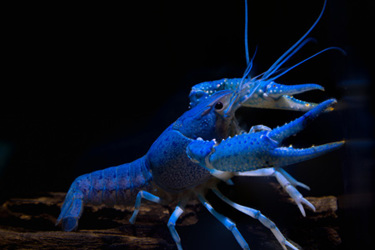
Our challenge isn’t to outthink nature but to learn from its optimized blueprints and reverse-engineer them for therapeutic use. For example, the ability of the blue crayfish (Procambarus alleni) to achieve incredibly rapid biomineralization is a physiological marvel that is now setting the stage for a new class of highly bioavailable mineral-based therapeutic agents.
The scientific journey began in 2004 with a simple observation that sparked an entire field of discovery. A crayfish farmer noticed that his crayfish were able to regenerate their shells very quickly after molting, far faster than anything seen in other crustaceans. Realizing that such rapid regeneration must be driven by a unique biological process, he turned to local academic researchers. What began as a curious question evolved into years of collaborative research and experimentation.
Together, the team uncovered a remarkable biological secret: before molting, crayfish store a special form of calcium carbonate in small internal structures called gastroliths. This calcium carbonate is not in the typical crystalline form found in nature, but rather in a rare, highly soluble form known as amorphous calcium carbonate (ACC). This discovery laid the foundation for a scientific breakthrough. By studying how crayfish protect and stabilize ACC, researchers developed the first methods to synthesize the mineral, laying the groundwork for today’s bio-inspired, amorphous nano-mineral technologies.
Unlocking Mineral Absorption With Amorphous Calcium Carbonate
The persistent challenge in managing human medical conditions — driven by mineral deficiency, like osteoporosis or chronic systemic imbalance — isn’t a lack of calcium supply but often a failure of its absorption and delivery. Current mineral-based therapies, which rely on the solubility and release of mineral ions in stomach acid, are inherently inefficient because they involve thermodynamically unstable crystalline salts. The absorption of these ions into the blood system through the intestines and their bioavailability is low, leading to suboptimal patient outcomes.
The blue crayfish offers an elegant solution to this challenge. To rapidly reform its shell after molting, a moment of extreme vulnerability, this species must form and release a calcium reservoir to build a new exoskeleton in just three days. Its secret lies in storing nanometric ACC instead of typical crystalline forms. This allows for significantly faster transfer and superior thermodynamic solubility of the mineral under mild acidic conditions.
This extraordinary process offers a biological proof of concept: if we can replicate and stabilize this nanometric and amorphous mineral phase, we might overcome one of modern medicine’s most persistent challenges: poor absorption and bioavailability.
This amorphous state is a metastable intermediate that is exponentially more soluble than its crystalline equivalents. Due to its nanometric form, ACC is efficiently transferred through mucous membranes into the body’s fluid systems.
Upon release, ACC rapidly dissolves in the body’s normal pH range or even in slightly acidic environments, flooding the biological environment with necessary ions for rapid, precise reconstruction. In parallel, the dissolved carbonate ions convert to bicarbonate ions, which serve as the body's main pH-regulating agents. This provides maximal calcium ion flux for optimal regenerative outcomes, while the local buffering enhances bioavailability and supports the positive functionalities of the body’s microbiological systems.
Understanding this mechanism provides researchers with a clear blueprint for creating novel, high-performance therapeutic tools and also points to a novel strategy for modulating malfunctioning pathological acidic microenvironments.
Stabilizing ACC For Therapeutic Use
Replicating the crayfish’s solution synthetically is a significant materials science challenge, because ACC is inherently unstable. By employing nanoscale principles, biomedical engineers have managed to recreate and stabilize ACC using novel matrices. The resulting nano-amorphous mineral material is manufactured as stable nanoparticles, with the nanoscale structure maximizing surface area and retaining the drastically enhanced dissolution kinetics found in nature.
This engineering breakthrough turns mineral delivery from simple supplementation into a precise bio-engineered therapeutic platform. By absorbing calcium significantly better through the gastrointestinal tract, in tandem with the pH modulation advantage, the material can deliver a far greater concentration of soluble, physiologically accessible ions. This enhances a combined bioactivity, achieving unprecedented therapeutic efficacy in treating both calcium deficiencies and acidotic conditions.
Turning Nature’s Insight Into Therapeutic Innovation
The development of this highly efficient nano-amorphous mineral technology holds the potential to disrupt markets by leveraging two core capabilities: efficient mineral delivery and systemic microenvironment modulation.
The foundational capability for rapid, efficient ion delivery is being applied to conditions driven by systemic imbalance and tissue repair. For endocrine and bone diseases, the enhanced absorption and bioavailability offer a strategy for superior calcium management in rare endocrine disorders, such as hypoparathyroidism, where orally administered therapies struggle with inefficient uptake of calcium. This principle is also crucial in musculoskeletal repairs, accelerating fracture healing and improving bone mass density in conditions like osteoporosis and trauma.
The second core capability, pH modulation, addresses acidotic environments associated with severe diseases and inflammations. Therefore, it presents a novel approach for inflammatory conditions like Crohn's disease by restoring the physiological pH balance in localized acidic intestinal tissues, leading to severity reduction and remission.
In oncology, the same principle targets the highly acidic tumor microenvironment (TME), a known driver of cancer progression and treatment resistance. Acting as a local pH buffer, the nano-amorphous mineral neutralizes acidity, potentially slowing tumor growth, reducing invasion, modulating the immune system, and enhancing the efficacy of co-administered therapies.
This dual approach represents a significant shift toward leveraging the physicochemical properties of minerals for complex therapeutic interventions across a range of therapeutic categories.
The underlying stabilization methodology can be extrapolated to other nano-amorphous metal carbonates, demonstrating versatility for multi-element homeostasis. This approach can be applied to other essential elements such as magnesium or zinc, offering a solution to widespread bioavailability issues across various chronic and metabolic diseases. The ability to control and target mineral delivery, combined with modulating microenvironmental pH, unlocks a new generation of therapeutics with a high therapeutic index.
Looking Ahead
Moving from the blue crayfish's shell to a new therapy confirms a basic truth in biology: billions of years of natural evolution often offer the best solutions for biomaterial challenges. While this new paradigm of nanoscale mineral biotherapies is currently undergoing the required regulatory scrutiny, the core principles have already been validated by nature. The nano-amorphous carbonates now stand as a key to enhancing the performance of biological systems.
About The Author
 Eden Ben is a biomedical engineer and the CEO of Amorphical, a clinical-stage biotechnology company pioneering nano-amorphous mineral pharmacologic agents. He earned his BSc in medical engineering from Afeka Academic College of Engineering, where he specialized in the mechanics of physiological systems.